

Why Mixed-Use Developments Need a Wellness Amenity Strategy Before Design Begins
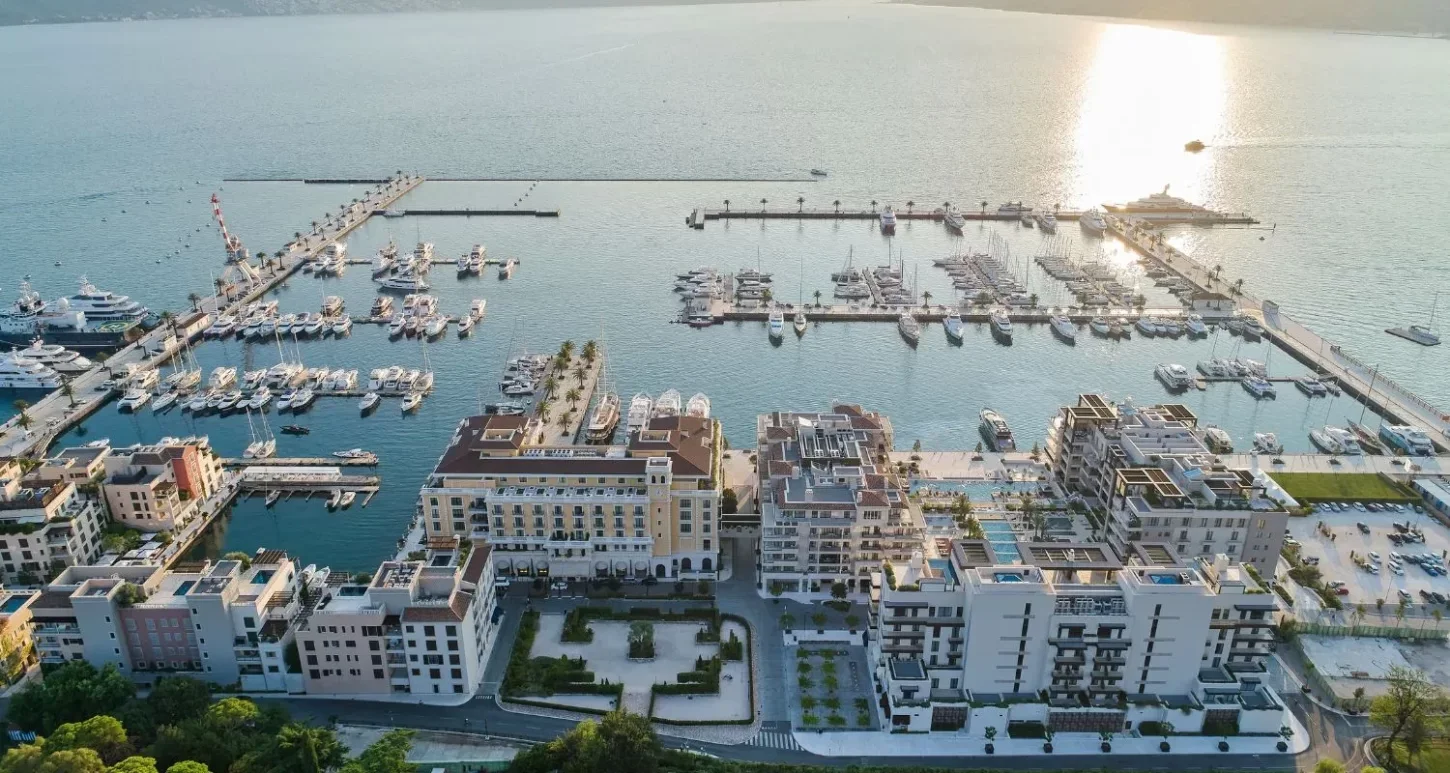
Porto Montenegro’s South Village, Tivat, MNE
Wellness amenities are no longer peripheral facilities within mixed-use real estate. In the right context, they can support residential sales, hotel positioning, office leasing, placemaking, PR value and long-term destination identity.
That makes them too commercially important to be planned as isolated design packages.
For developers, the key question is not simply: “What wellness amenities should we include?”
It is: “What strategic role should wellness play in the performance and positioning of this development?”
Wellness as part of the development strategy
In a mixed-use development project, wellness is rarely contained within one space.
A hotel may need a strong fitness and recovery offer to reinforce its brand position. Branded residences may need amenities that help buyers imagine the lifestyle on offer. Office tenants may value facilities that support staff wellbeing and workplace attractiveness. Retail and F&B operators may benefit from increased footfall generated by active, social and health-led uses. Landscape, public realm, walking routes, sport and outdoor recreation can all contribute to the same proposition.
When these components are planned separately, the result can feel fragmented. When they are planned as a system, wellness becomes part of the commercial infrastructure of the development.
That system might include a hotel wellness club, residential gyms, spa and recovery spaces, outdoor fitness, sports facilities, landscaped walking routes, healthy F&B, active public realm and destination-level programming.
The value lies not only in the individual amenities, but in how they work together.
Why mixed-use projects need early wellness strategy
Before design begins, developers need clarity on the commercial function of wellness.
Is the wellness offer intended to support residential sales? Strengthen hotel ADR and brand positioning? Attract office tenants? Generate membership revenue? Create a stronger placemaking anchor? Build PR value? Support a premium lifestyle narrative?
Different answers lead to different design, operational and investment decisions.
A private residential gym is not the same as a destination wellness club or a residential tower that leverages healthy building principles. A hotel spa is not the same as a membership-led recovery space. A workplace wellbeing offer is not the same as a public-facing sports facility.
Mixed-use developments often need several of these roles to operate together.
This is why a wellness amenity strategy should come before individual spaces are designed. It creates alignment around target users, access models, operational assumptions, amenity hierarchy, market positioning and the relationship between hotel, residential, office, retail, landscape and public realm components.
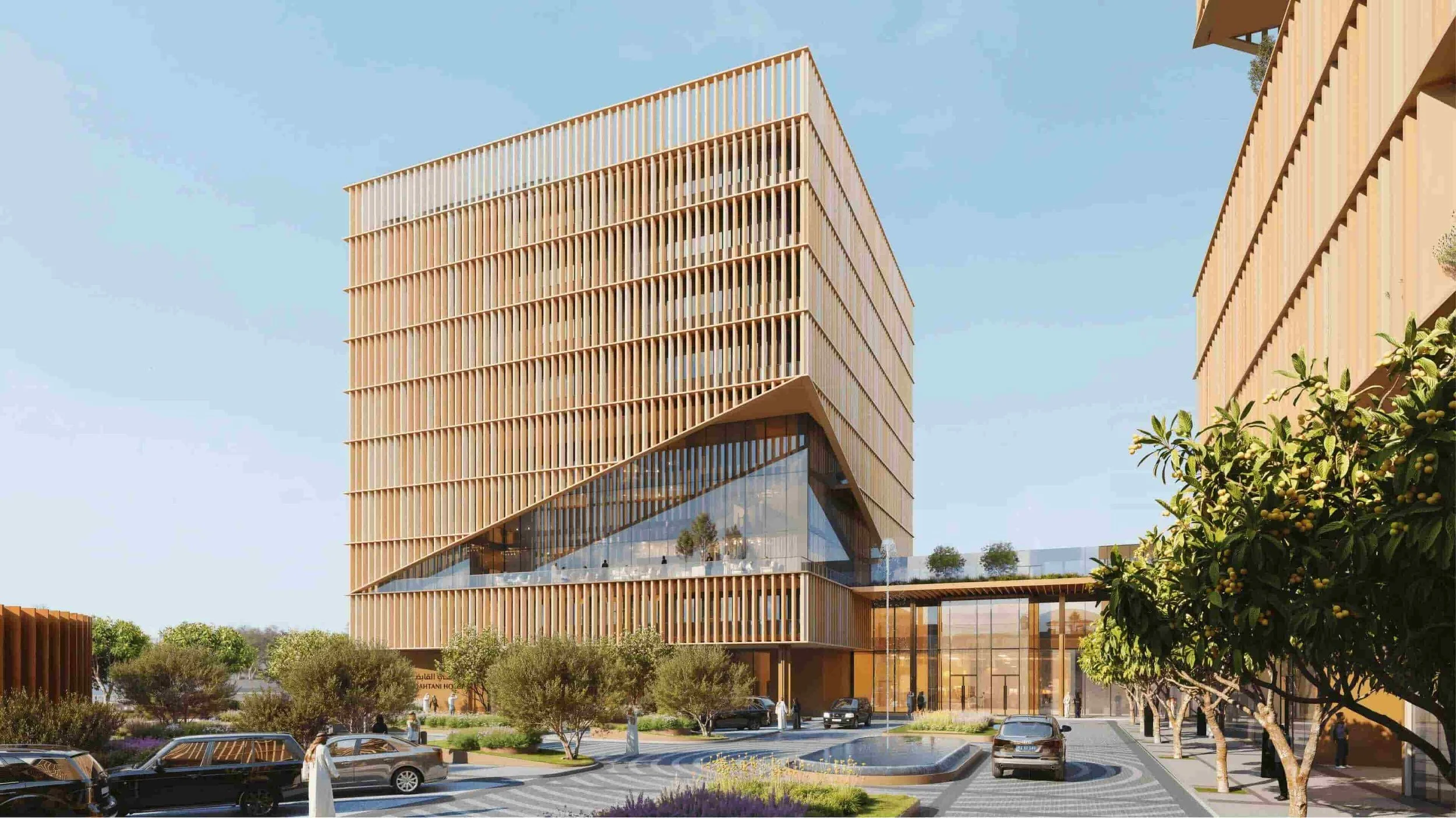
Merkan Quarter, AlKhboar, Saudi Arabia
Merkan Quarter: wellness as a mixed-use magnet
Merkan Quarter in Al Khobar, developed by Refad Real Estate Investment & Development, brings together office space, commercial and retail areas, a Conrad hotel and supporting amenities within a mixed-use development. Refad describes the project as a central hub with more than 57,000 sqm of built-up area, including office leasable area, commercial leasable area, car parking and 145 five-star hotel suites.
Within that context, the wellness club connected to the Conrad hotel has a role that extends beyond a conventional hotel facility.
It can support the hotel’s luxury positioning. It can help prospective branded residence buyers understand the lifestyle value of the development. It can add appeal for office tenants and their staff. It can also contribute to placemaking by creating an active, health-oriented anchor within the wider mixed-use environment.
In this context, the wellness club is not just an amenity.
It becomes part of the development’s value proposition.
To do that well, the developer needs to define how the wellness offer relates to the hotel, residences, office community, retail experience and public identity of the project. Access, membership, operating model, guest journey and positioning all need to be considered before the detailed design work begins.
Porto Montenegro: wellness as a lifestyle ecosystem
Porto Montenegro (where I lived and worked from 2010-2014) illustrates a different strategic model.
Here, wellness is not defined by one facility alone. It forms part of a broader lifestyle ecosystem connected to the marina, residential community, hospitality offer, sports infrastructure, outdoor recreation and the wider Adriatic setting.
The outdoor beach gym designed for Porto Montenegro created a visible wellness talking point and generated PR value. But the deeper wellness strategy was broader than one outdoor fitness installation. The Sports Club, Tennis Club, Yacht Club and smaller residential gyms all contributed to the lifestyle proposition.
The arrival of SIRO Boka Place further strengthened Porto Montenegro’s wellness credentials. SIRO positions its Montenegro property around fitness, wellness and leisure in Boka Bay, while the wider SIRO brand is built around fitness, recovery and health-oriented routines.
That matters because Porto Montenegro is not selling only apartments, berths, hotel rooms or retail space.
It is selling access to a lifestyle.
For families considering investment in an apartment or marina berth, the wellness proposition is reinforced by the surrounding environment: sailing, jogging, mountain biking, outdoor recreation, sport, hospitality and social life around the marina.
The lesson for mixed-use developers is clear. The strongest wellness strategies are not always defined by the largest gym or most expensive spa. They are defined by the way different assets combine into a credible, desirable and commercially useful lifestyle offer.
What developers should define before design begins
A wellness amenity strategy should help resolve the major decisions before plans become too fixed.
At minimum, developers should define:
1. The commercial role of wellness
Wellness may support sales, leasing, hotel performance, membership revenue, PR, destination positioning or public realm activation. The priority needs to be clear.
2. The target users
Hotel guests, residents, branded residence buyers, office tenants, employees, local members, families, tourists, marina users and local community groups may all have different needs and expectations.
3. The amenity hierarchy
Some amenities are value drivers. Some are expected baseline features. Some are signature differentiators. Others are supporting elements. The hierarchy should be defined before space, budget and design attention are allocated.
4. The access model
Private, semi-private, hotel-only, residential-only, membership-based, tenant-accessible or public-facing models all have different implications for revenue, privacy, circulation, staffing, security and operations.
5. The relationship between indoor and outdoor wellness
Walking routes, running loops, sports courts, outdoor gyms, landscaped recovery areas, waterfront promenades and active public realm can all contribute to the wellness proposition. In destination settings, the landscape itself may be one of the strongest wellness assets.
6. The operating model
Staffing, maintenance, service standards, operator involvement, opening hours, programming, membership structure and seasonal use should be considered early. A compelling amenity on a plan still needs a viable operating model.
7. The development narrative
Wellness amenities help communicate what the development stands for: active, restorative, premium, social, family-oriented, performance-led, nature-connected, hospitality-driven or community-focused.
That story should be clear before design begins.
Strategy makes design more valuable
A wellness amenity strategy does not replace architecture, interior design, landscape design, hospitality planning or technical consultancy.
It makes those disciplines more effective.
Once the strategic role of wellness is clear, individual spaces can be designed with sharper purpose: gyms, spas, recovery areas, sports clubs, residential amenities, workplace wellness areas, restorative interiors, outdoor activity zones and public realm experiences.
Without that strategic layer, a project may still produce attractive facilities. With it, wellness has a better chance of supporting the wider commercial objectives of the development.
Green Healthy Places
Green Healthy Places helps developers define the strategic role of wellness in mixed-use real estate before individual amenities are designed.
This includes the commercial logic, target audiences, amenity hierarchy, access model, placemaking role, market positioning and relationship between different real estate components.
The goal is not simply to add more wellness amenities but to make wellness work harder for the development.
This article was written by Matt Morley, a TEDx speaker and IWBI WELL Building Standard Advisor (Mind chapter: 2026).
Conclusion
Mixed-use developments need more than a list of amenities.
They need a joined-up wellness amenity strategy that defines how health, fitness, recovery, sport, hospitality, landscape, public realm and lifestyle infrastructure support the commercial objectives of the project.
At Merkan Quarter, wellness can support the wider value proposition across hotel, residences, office tenants and placemaking. At Porto Montenegro, wellness operates as part of a broader lifestyle ecosystem connecting hospitality, sport, marina life, residential value and outdoor activity.
For developers, the principle is simple.
Wellness should be planned before design begins, because design becomes more valuable when the strategic role of wellness is already clear.
Request a wellness amenity strategy review for your mixed-use development.