

Small Interventions, Big Uplift for Mixed-Use Development Placemaking
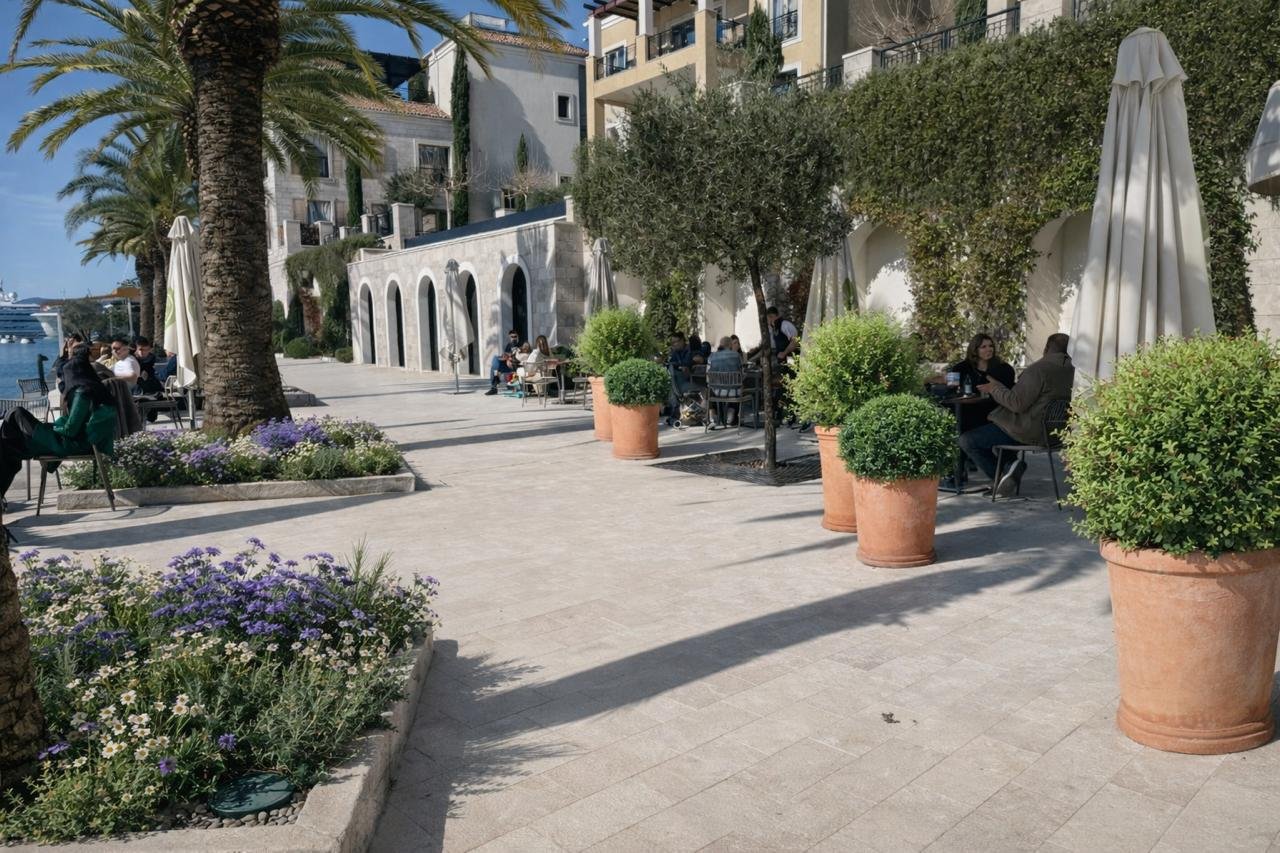
landscaping visualization by alfonso perez ventana for green healthy places and porto montenegro
Not every mixed-use development needs a dramatic redesign to feel better, perform better or leave a stronger impression.
In many cases, the biggest shift in perception comes not from large-scale redevelopment, but from a handful of carefully chosen interventions in the right places. A stronger arrival moment. A better-defined terrace edge. More coherent planting. Higher-quality planters. A clearer pedestrian threshold. Better lighting or seating in one visible public-facing node.
These may sound like small moves. Strategically deployed, they can create a disproportionate uplift.
This is one of the most overlooked aspects of placemaking. Owners and operators often assume that if the public realm feels underwhelming, the answer must involve heavy capex, major reconstruction or a lengthy redesign exercise. Sometimes that is true. Often, it is not; the issue is not the absence of investment altogether. It is the absence of focus.
The problem is rarely everywhere at once
In underperforming destinations, the public realm often feels weaker than it should for reasons that are quite specific. The main arrival sequence does not convey enough quality. The most visible retail frontages feel fragmented. A restaurant terrace lacks structure and softness. A waterfront edge feels too hard and exposed. The planting language is inconsistent from one zone to the next. A pedestrian connection feels visually thin and unresolved.
When these issues are spread across a site, the instinct can be to think in broad, zone-based terms: upgrade the whole waterfront, redesign the whole retail district, improve all of the landscape at once. That can quickly become expensive, slow and difficult to deliver.
A more strategic approach starts with a different question: where are the specific intervention sites that have the greatest effect on how the destination is perceived?
That might be a hotel frontage, a gateway node, a cluster of terrace planters, a public square, a retail edge or a pedestrian transition between two key parts of the site. These points often carry a disproportionate share of the visual and experiential burden. Improve them, and the whole place can begin to feel more coherent.
Why targeted interventions work
People do not experience places evenly.
They tend to remember first impressions, key thresholds, highly visible frontages, repeated routes and spaces where they pause. That means a relatively small number of physical locations often shape the overall impression of quality more than the rest of the site combined.
This is why targeted public realm interventions can be so effective. They focus effort where perception is most concentrated.
For example, replacing a scattered collection of low-quality planters with a coordinated family of better-scaled containers may seem minor on paper, but in practice it can sharpen the image of a whole frontage. Strengthening planting at a principal arrival point can improve the experience of the entire destination before a visitor has engaged with any building. Clarifying the landscape language around a restaurant terrace can make the hospitality offer feel more curated and premium, even if nothing else around it changes.
The point is not that small interventions are always enough. It is that they are often more powerful than expected when they are well chosen.
Selectivity is a strategic skill
One of the most common mistakes in public realm improvement is spreading budget too thinly.
There is a temptation to do a little bit everywhere: a few planters in one area, some cosmetic planting in another, minor updates scattered across the site. The result can be a diluted programme that consumes budget without creating a clear shift in perception.
A better strategy is to be selective.
That means identifying the sites where intervention will deliver the greatest return in terms of visibility, experience and overall place quality. In premium destinations, those sites usually include arrival points, hospitality edges, public-facing retail frontages, key terraces, public realm nodes and important pedestrian connectors.
This kind of selectivity is not about doing less. It is about concentrating effort where it matters most.
It also makes implementation easier. A focused package of upgrades is more likely to be procured properly, delivered consistently and maintained well over time than a long list of fragmented actions spread across the entire site.
Small does not mean superficial
There is a risk that the phrase “small interventions” sounds cosmetic. That is not the point.
A well-judged intervention should still be rooted in strategy. It should respond to a real weakness in how a place performs or is perceived. It should support the wider positioning of the development. It should improve coherence, not add more visual noise. And ideally, it should form part of a repeatable language that can be extended over time.
This is where many quick-fix upgrades go wrong. They focus on visual patching rather than strategic uplift. New elements are added without enough thought to hierarchy, placement, materials, durability or long-term consistency. The result may look different, but not necessarily better.
The most effective small interventions are the opposite. They are selective, site-specific and disciplined. They simplify. They clarify. They reinforce the identity of the place.
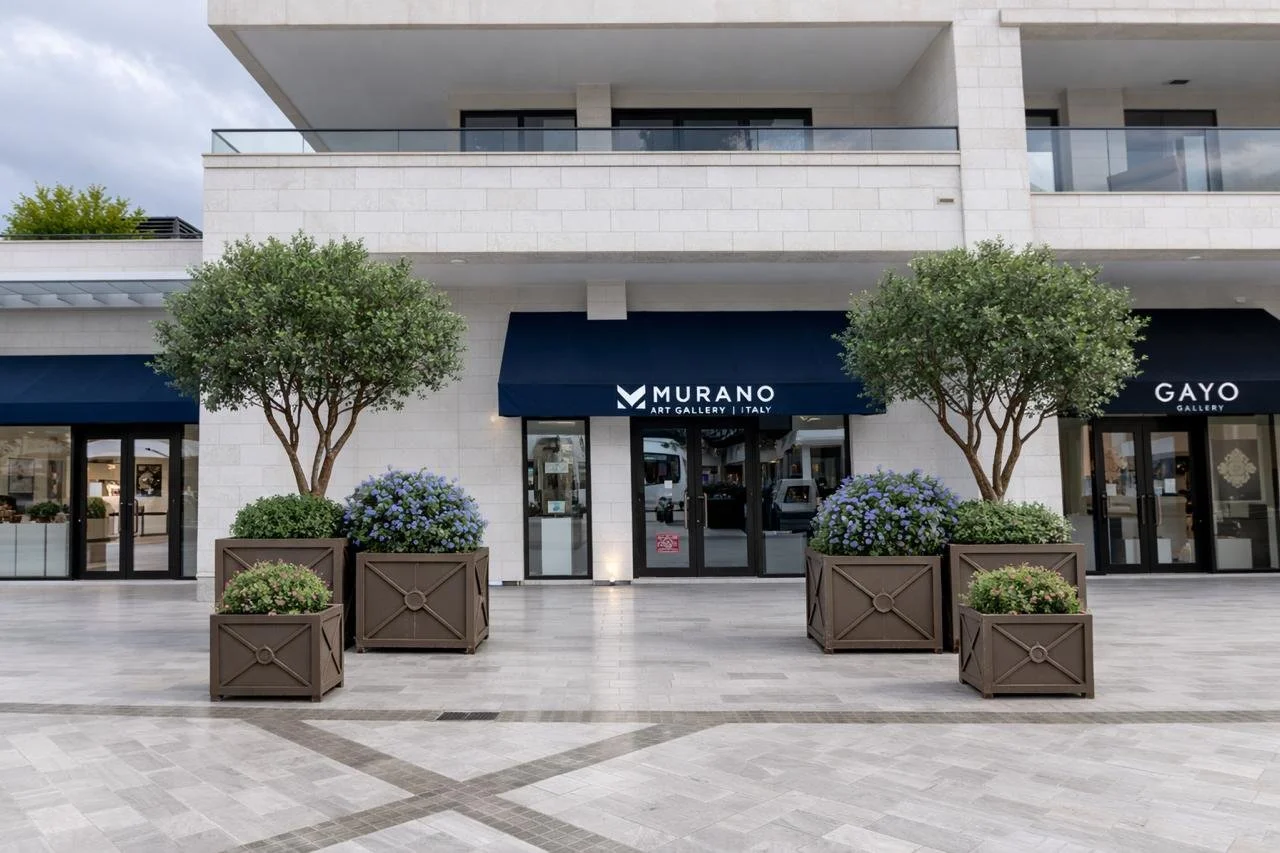
landscaping visualization by alfonso perez ventana for green healthy places and porto montenegro
What kinds of interventions create the biggest uplift?
The answer depends on the site, but several themes appear repeatedly in premium mixed-use environments.
Arrival points are usually high-value opportunities. A better framed threshold, stronger planting composition or more coherent edge treatment can transform first impressions quickly.
Retail frontages also matter, especially where luxury or hospitality-led brands are involved. Consistency of planters, planting character and spatial definition can materially improve the pedestrian experience and perceived quality of the commercial environment.
Restaurant terraces are another strong candidate. Small upgrades to the planting edge, enclosure, softness and visual coherence of these spaces can noticeably improve ambience and guest experience.
Waterfront edges, public squares and pedestrian connectors can also benefit from selective intervention, particularly where they currently feel hard, generic or under-activated.
In all of these cases, the issue is not simply design. It is prioritisation.
Big uplift comes from clear hierarchy
The most successful public realm strategies understand hierarchy. They recognise that some spaces carry greater strategic importance than others.
A principal hotel frontage should not be treated in the same way as a secondary back-of-house edge. A major visitor arrival should not be approached with the same level of attention as a low-traffic route. A flagship retail frontage or restaurant terrace will often justify more concentrated investment than a secondary connector.
This does not mean neglecting the rest of the site. It means sequencing intelligently.
By identifying the highest-impact intervention sites first, owners and operators can create visible uplift early, establish a stronger language for future works and avoid the trap of trying to fix everything at once.
Final thought
In placemaking, scale is often misunderstood.
Bigger budgets and larger interventions do not automatically produce better outcomes. What matters is whether the effort is focused on the right places, with the right intent and the right level of discipline.
A few targeted improvements, properly prioritised and well executed, can materially change how a destination feels. They can strengthen arrival, improve public-facing hospitality and retail spaces, create a more coherent visual language and make the whole development feel more considered.
That is the real value of small interventions.
Not that they are minor, but that they are strategic.