

La Tour d’Eole in Dakhla — Building an Eco-Resort Around Nature, Sport, and Sustainability
Listen to the episode:
Spotify: https://open.spotify.com/show/0OoHv8oT95NNWFgraVSp8v
Apple Podcasts: https://podcasts.apple.com/es/podcast/green-healthy-places/id1522838324
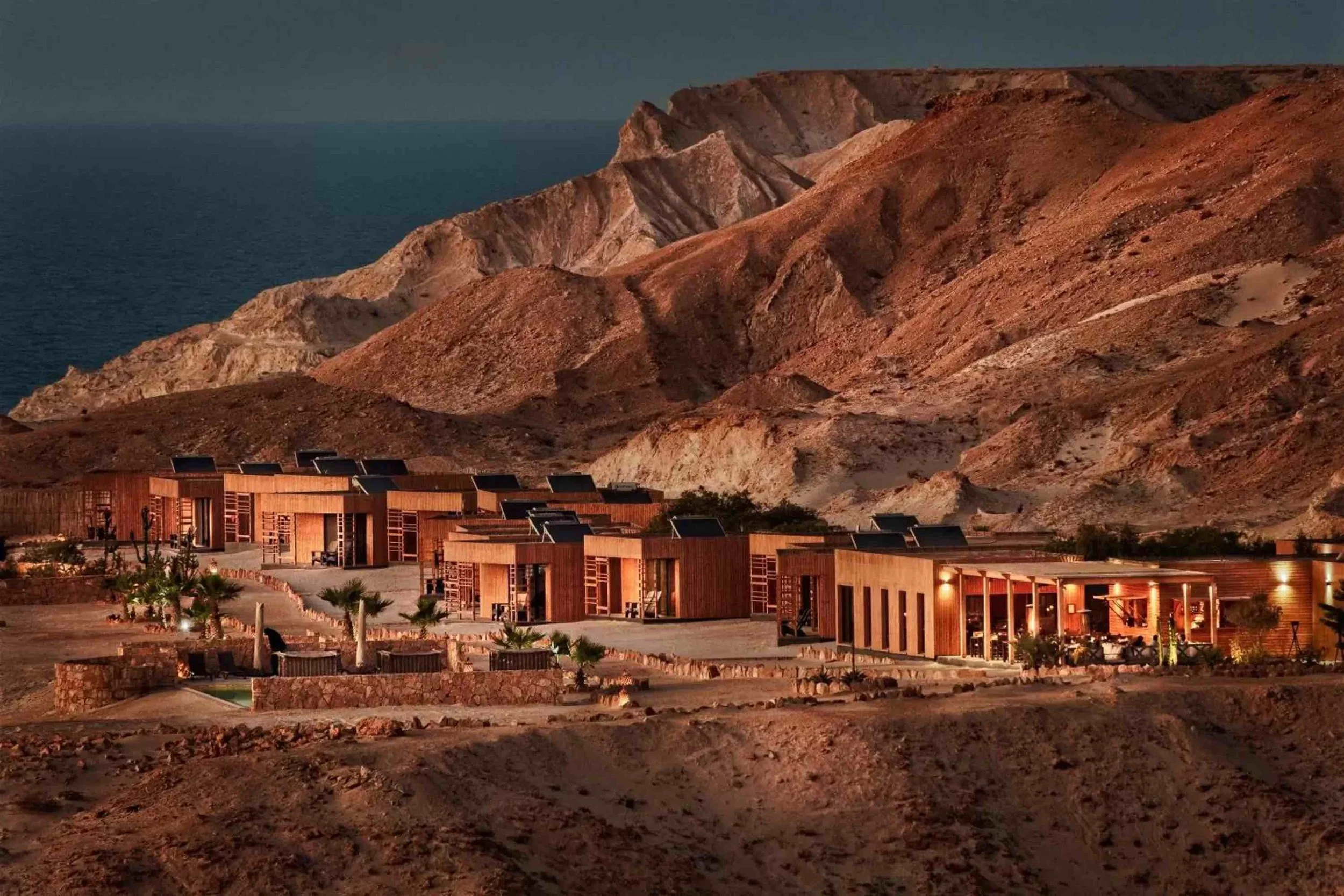
Sensitive integration into the desert landscape
Overview
In Episode 90 of the Green Healthy Places podcast, I speak with Jérôme Schanker, Founder and CEO of La Tour d’Eole, an upmarket eco-resort in Dakhla, Morocco, built around outdoor water sports, recovery-led wellness, and a serious commitment to sustainability.
What makes this conversation especially relevant for developers, designers, and operators is the clarity of Jérôme’s approach: sustainability was not added later—it was the starting point. From material selection and wastewater reuse to passive comfort strategies that reduce reliance on air conditioning, the resort is positioned as a case study in aligning brand, operations, and built-environment decisions with a fragile natural setting.
What you’ll learn
Why “build responsibly or don’t build at all” becomes non-negotiable in fragile landscapes
How water and energy systems can take years to optimise—and why persistence matters
How passive design (wind + sun + shading) can deliver comfort without air conditioning
Why sport-led resorts are expanding “wellness” beyond the spa—and into recovery + movement
How local sourcing, hiring, and training can become a practical ESG strategy (not a slogan)
Episode highlights
Wood as a responsibility decision, not only an aesthetic one—with careful sourcing to avoid contributing to deforestation.
A closed-loop wastewater approach where treated water is reused for irrigation—now watering 100% of gardens in a desert context.
A candid admission that early wastewater treatment “didn’t work,” and required iterative investment and refinement over several years.
Passive comfort principles: wind-driven cooling, solar control, low-E glazing, and timber shading strategies to reduce or remove the need for AC.
A wellness philosophy where nature and water sports are the core wellness experience, supported by yoga, mobility, massage, and recovery treatments.
The resort’s next chapter: villa expansion adjacent to the resort and a future site planned in Boa Vista, Cape Verde (construction planned to start in 2027).
Sustainability from day one: materials, water, and energy systems that must work
Jérôme is explicit that La Tour d’Eole began with sustainability as the project’s “starting point,” not an add-on. In a fragile lagoon environment with no surrounding infrastructure, the logic is simple: if the resort damages the setting, the destination loses what makes it exceptional.
One of the first decisive moves was to build largely in wood—chosen not only for warmth and natural character, but for its lower environmental impact when responsibly sourced. Importantly, he frames material selection as an ethical obligation, not a style preference.
The reality of “doing it properly”: wastewater reuse takes iteration
A standout part of the discussion is operational honesty. Jérôme describes how their wastewater treatment system initially created issues (odour, flies) and was not viable as installed. Rather than abandoning the approach, they paused, reinvested, adjusted, and refined until it became reliable—ultimately enabling treated water to irrigate all gardens on site.
For project teams, this is a practical reminder: circular systems often require a commissioning mindset that extends well beyond opening day, with ongoing operational tuning and accountability.
Passive comfort in a desert microclimate: designing out air conditioning
Dakhla’s climate combination—strong sun moderated by cooling wind—creates an unusual opportunity. Jérôme explains how the resort leverages this for natural ventilation, complemented by low-emissivity glazing and wooden shading elements to protect from solar gain.
The ambition is not incremental efficiency; it is about comfort without air conditioning, and Jérôme notes that new suites are being designed around this principle.
For architects and developers, the transferable lesson is not “copy Dakhla,” but rather: treat climate as a design resource, and push envelope/shading/ventilation strategies far earlier—before systems engineering becomes a default crutch.
“A mirage in the landscape”: architecture that refuses to dominate nature
The resort’s design intent is described as near-invisibility—low, horizontal massing, volumes close to the ground, and timber tones that blend into the surrounding mountains and desert palette. Jérôme describes the resort as something that “appears and disappears,” even noting that from the water while kitesurfing, the hotel can be difficult to see.
This is more than a poetic idea; it is a restraint-based design position: no vertical statements, no domination of the horizon, and a commitment to integration over iconography.
Wellness beyond the spa: sport, recovery, and “nature-first” programming
Jérôme’s wellness framing is particularly aligned with where hospitality is heading: wellness is not confined to treatment rooms—it starts outside.
At La Tour d’Eole, water sports (kitesurfing, wing foiling, windsurfing) are positioned as a direct pathway to mental presence and embodied recovery through time in the elements—wind, water, space, focus, and effort.
The structured wellness offer is then built around recovery and balance: yoga, mobility, stretching, massage, and recovery treatments to support guests after long sessions on the water (or simply long days outdoors).
Why a gym still matters in a sport-led resort
Even in a destination where the outdoors is the main “training floor,” Jérôme explains a familiar operational reality: sometimes the wind drops, and guests still want to move.
The gym, as described, is intended to be:
Small, high-quality, and aligned with the resort’s identity
Focused on cardio + functional training + mobility
Designed in a clean, natural aesthetic consistent with the timber-based architecture
This is a useful positioning for developers and hotel owners: the gym is not competing with the destination’s core experience; it is a continuity tool that supports guest routines, rest days, and mixed travel groups.
Local culture and ESG in practice: people, skills, and supply chains
Jérôme describes community integration as operational, not performative. Key elements include:
Collaboration with local artisans and craftspeople (including locally made furniture pieces)
Use of regional stone and local stone-building expertise
Building relationships with farms to overcome an export-only local production bias—resulting in sourcing produce from within a few kilometres of the resort
A pragmatic staffing model: importing a highly skilled executive chef, while training and building the wider kitchen team locally, including through local hospitality education
For anyone serious about ESG, this is the “S” made tangible: skills development, employment, training pathways, and a local economic loop—without diluting operational standards.
What’s next: expansion with restraint
Rather than replicating quickly, Jérôme outlines a growth philosophy based on “continuity”—deepening what has been learned and applying it carefully. The next steps include:
Domaine d’Eole: a collection of exclusive villas adjacent to the existing resort (construction had just started at the time of recording)
A future project in Boa Vista, Cape Verde, with construction planned to start in 2027, again focused on an exceptional and fragile natural context
The selection criteria is revealing: the land must be unique, remote, and sensitive—places where the brand’s core logic (preserve what makes the place special) remains authentic.
Practical takeaways for developers, architects, and operators
If sustainability is central, treat it as a design brief and operating system, not a marketing layer.
Circular systems (water reuse, energy optimisation) require commissioning, iteration, and ownership beyond opening day.
In the right climate, passive strategies can meaningfully reduce mechanical dependency—start with shading, glazing, ventilation, and orientation early.
Wellness programming gains strength when it is place-based: nature + movement + recovery, with the spa as support rather than the headline.
The social dimension of ESG becomes credible through hiring, training, artisan collaboration, and local supply chains—done consistently, not occasionally.
FAQ
Where is La Tour d’Eole located?
La Tour d’Eole is located in Dakhla, Morocco, in a remote desert-and-lagoon context with a strong wind and water-sports culture.
What makes La Tour d’Eole an “eco-resort” in practical terms?
The resort prioritises sustainability through material choices (largely timber construction), on-site wastewater treatment reused for irrigation, solar water heating, low-energy equipment selection, and passive comfort principles designed to reduce air conditioning demand.
How can a resort in a desert environment maintain gardens responsibly?
In this case, treated wastewater is reused for irrigation, and Jérôme states that 100% of the resort’s gardens are watered using treated water from on-site systems.
Is wellness at La Tour d’Eole mainly spa-based?
No. The wellness positioning is nature-first and sport-led, with water sports central to the experience. Spa and wellness offerings focus on recovery and balance through yoga, mobility, massage, and recovery treatments.
Why add a gym if most guests come for water sports?
Because even sport-led guests want consistent movement routines—particularly when conditions change (e.g., when the wind drops). The gym is framed as a complementary “missing piece,” focused on functional training, cardio, and mobility.
How do guests get to Dakhla?
Jérôme notes direct flight options from Europe (including routes from Paris and Madrid at the time of recording), plus connectivity via Casablanca for broader international access.
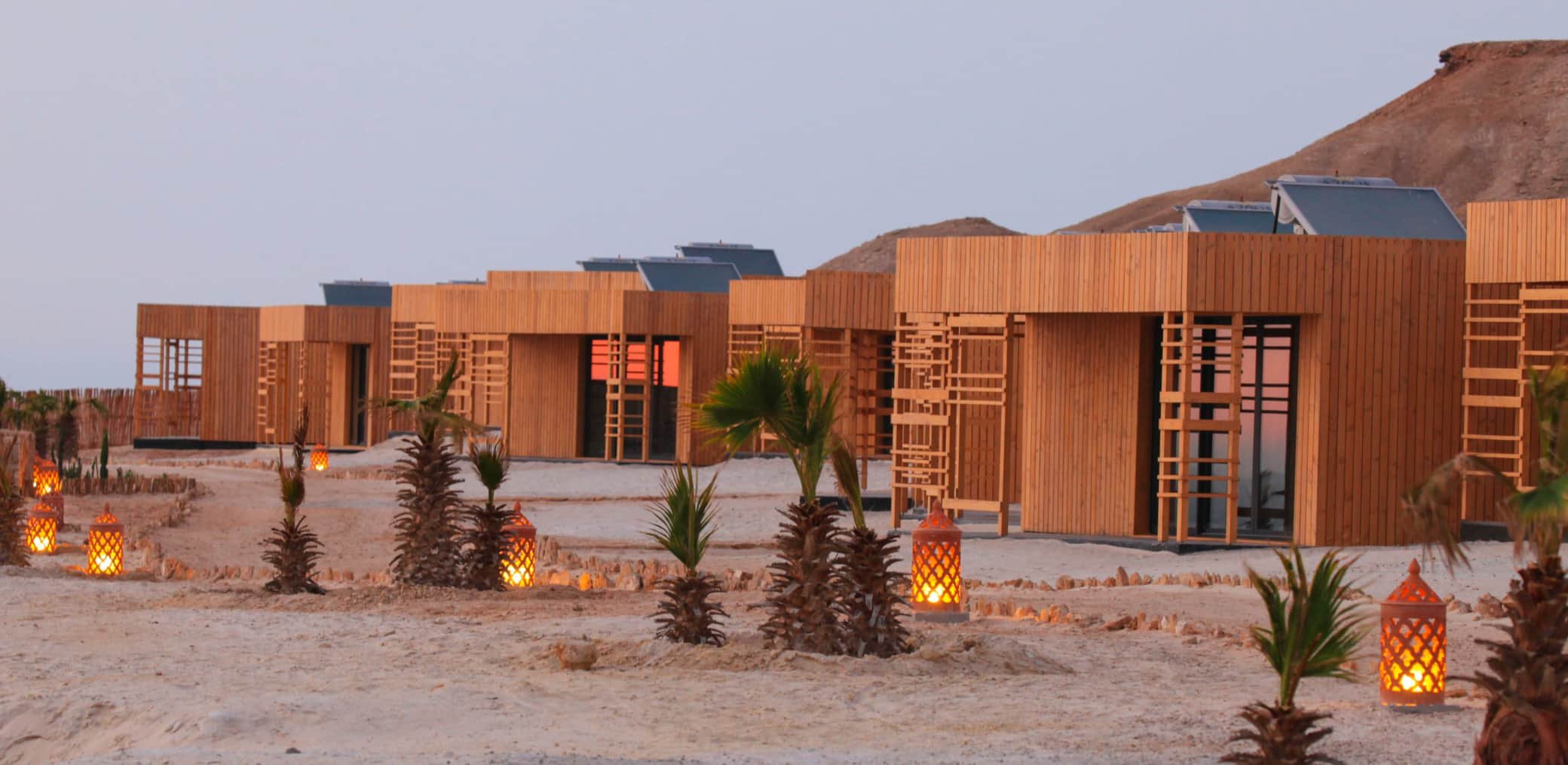
Eco-lodge structures with solar panels.
Matt Morley: Welcome to episode 90 of the Green Healthy Places podcast, in which we discuss the themes of well-being and sustainability in our built environment. I’m your host, Matt Morley. For this episode, we’re in Morocco talking to Jérôme Shanker, founder and CEO of La Tour d’Eole in Dakhla, an upmarket eco resort with a strong wellness and outdoor sports angle—kitesurfing, windsurfing, and even some surfing. Jérôme launched his hotel development and operations business back in 2017 after a successful career in finance trading equity derivatives. Jérôme, welcome to the podcast. Great to have you.
Jérôme Shanker: Thank you.
Matt Morley: You integrate sustainability and nature into your eco positioning. How have you integrated sustainability from the beginning—was it always the idea?
Jérôme Shanker: We started with this idea. From day one, sustainability wasn’t something we added. Dakhla is a fragile environment and it was obvious that building here means building responsibly. Otherwise, the project wouldn’t make sense. One of the first strong choices was to build largely in wood—not only because it’s warm and natural, but also lower impact when sourced properly. We were careful choosing the wood to ensure it doesn’t contribute to deforestation. Material choices are never just aesthetic; they come with responsibility.
We also invested a lot in technical systems around water and energy. We use solar panels to heat water and we treat all our waste water right here so it can be reused for irrigation. Today, 100% of our gardens are watered this way. We’re proud to have gardens growing well in the middle of the desert.
It wasn’t easy at the beginning. When we first opened, the system wasn’t efficient. We kept investing, adjusting, and improving. Today it’s reliable.
Matt Morley: How long did it take to get the system to where you were satisfied?
Jérôme Shanker: When we opened, we had it, but it didn’t work. After one year it was smelly and brought flies. It wasn’t working properly. To be honest, the system has been efficient for about six months. It took a few years to adjust and have the right system working properly. Now it’s reliable.
Matt Morley: It reflects your belief and determination to stick to the right way to do things.
Jérôme Shanker: Yes. We kept going in this direction. We also developed an organic garden. We grow lettuce, tomatoes, pumpkins, melon, zucchini—part of what guests eat comes directly from the garden. Dakhla is fascinating climatically because the sun is strong and the wind is cooler. This allows natural ventilation. With low-emissivity windows and wooden shading to protect from the sun, we can create comfortable rooms without air conditioning. We’re building new suites designed around this—no air conditioning at all. The combination of wind and sun in Dakhla makes it possible.
We’re also careful about energy consumption in daily operations. When we invest in equipment, we pay attention to power usage and choose the lowest-energy options that make sense operationally. Another key aspect is local sourcing. Dakhla produces incredible fruits and vegetables—tomatoes, melons, blueberries—sometimes just a few kilometres away. When we started, most production was for export, so you couldn’t buy locally even if farms were near. It took time, but we built relationships and now we source directly. Most produce comes from farms located less than two kilometres from the hotel.
Matt Morley: For someone who hasn’t seen the location, could you describe the context? You’re in the desert—how did architecture and landscaping integrate into that?
Jérôme Shanker: The hotel is in the middle of nowhere. No infrastructure around—only us in the middle of mountains facing a lagoon. It’s fragile, which is why sustainability is key. The landscape is stunning and untouched. From the beginning, our ambition was for the hotel to be integrated into the landscape—almost like a mirage. The dominant color here is soft tones; we chose Douglas wood partly because the natural color blends beautifully. Over time it ages and becomes even more discreet.
Architecturally, we kept everything low and horizontal—no vertical statements, no buildings dominating the site. Volumes are spread out and stay close to the ground, following the horizon. When you arrive, the hotel doesn’t impose itself; it slowly appears and disappears. Even when I kitesurf and look back, I can’t always see the hotel—it blends into the mountains. That was our objective, and it works.
Matt Morley: That full integration into nature connects with your approach to wellness too—getting people outdoors, connecting with sea, water, wind, breaking down barriers between inside and outside.
Jérôme Shanker: Totally. Nature is the foundation of the experience. Wellness doesn’t start in the spa; it starts outside. Water sports are central—kitesurfing, wing foiling, windsurfing—connecting with elements: wind, water, space. Guests spend hours fully present and focused, which impacts body and mind. We built a wellness approach focused mainly on recovery and balance: yoga, stretching, mobility, massages and recovery treatments. These support the body after sports but also for guests who spend long days outdoors and want to slow down. Nature is integrated everywhere. For example, our infinity pool—when you swim, you face the origins, the sun, the ocean. It becomes a moment of connection with nature.
Matt Morley: You’ve adapted the wellness offer around recovery and yoga to match your niche audience. What about a gym—did you leave it out because it’s all about outdoor sport, or is there guest demand?
Jérôme Shanker: The idea of a gym comes from our guests. We welcome very active people—95% of guests do sports. Most of the time they’re on the water, but sometimes the wind drops. When it does, people still want to move. Today guests have access to the pool, yoga sessions, and outdoor spaces. The gym is the missing piece that completes the experience without replacing anything.
We want it aligned with our kitesurfing identity but still familiar: a few high-quality machines, some cardio equipment, and space for mobility and functional training. It’s about offering the right tools. Design will be clean and natural with wood finishes to match the architecture. That’s also why we contacted BioFit—important that the gym fits the ecological philosophy of La Tour d’Eole, and that the approach aligns with our DNA.
Our guests are evolving too—more families and mixed groups. Not everyone kitesurfs. Some prefer yoga or different forms of movement. Our ambition is a resort built around sports and wellness in a broad sense, where everyone can find their own balance.
Matt Morley: That’s exactly where the industry is going. You also mentioned community connections and sourcing local ingredients. How else have you integrated local culture into the space?
Jérôme Shanker: From the beginning it was important that La Tour d’Eole be rooted in Dakhla, not just built here. The community welcomed us. Engaging with the community isn’t a side project; it’s part of daily operations. We work closely with local artisans and craftsmen—some furniture pieces are made in Dakhla. There’s real savoir-faire building with stone; there’s a beautiful local stone, and we use it in our architecture.
Food is another strong link. We work with nearby fruit and vegetable producers when possible. We also source oysters from local farms less than two kilometres away. Operationally, there aren’t many highly experienced chefs locally, so instead of importing an entire team, we brought in a talented head chef from Marrakech, Ali Timoni, and built the rest of the kitchen team locally. Most kitchen staff comes from Dakhla and has been trained locally, often through the hospitality school. We’re proud of that—the hotel has become a place of learning and transmission.
The same applies to other activities: at the Ocean Academy, almost the entire team is from Dakhla because they know the region and wind. Local culture is present through people, materials, skills, and daily interactions guests have.
Matt Morley: That becomes part of ESG—social impact, training people, spreading tourism wealth into the community.
Jérôme Shanker: Yes, totally.
Matt Morley: Where does it go from here? Expand the site, add another destination?
Jérôme Shanker: Yes, we want to expand, but our vision is continuity. We don’t want to grow fast and replicate mechanically. What matters is deepening what we’ve learned and applying it carefully. The first step is Domaine d’Eole—construction started two days ago next to La Tour d’Eole: exclusive villas. It’s an opportunity to use everything we’ve learned—architecture, energy, water systems, comfort, landscape integration—and push further.
Beyond that, we’re working on a second destination in Boa Vista, Cape Verde, with construction planned to start in 2027. The philosophy is similar: exceptional nature, fragile context. The level of responsibility is extremely high. Before expanding, we need to find unique land we want to preserve. It’s not “the concept works, let’s build 10 hotels.” It needs to match the identity: middle of nowhere, fragile environment, not among other hotels. The next stages are Dakhla (Domaine d’Eole) and Boa Vista (Cape Verde).
Matt Morley: If people want to follow you, where are you most active?
Jérôme Shanker: Instagram mainly.
Matt Morley: How do people get to you—flight routes and transfers?
Jérôme Shanker: There are direct flights from Paris three times per week with Royal Air Maroc and Transavia. There are flights from Madrid with Ryanair, and from Las Palmas as well. Direct flights from Europe will continue to grow; they plan maybe direct flights from London and Brussels. Otherwise you can fly via Casablanca and then Casablanca–Dakhla; flights run every day. The easiest is direct via Paris.
Matt Morley: Thanks for your time—really interesting conversation, and best of luck with future developments.
Jérôme Shanker: Thank you, Matt.
For more conversations on sustainable real estate, healthy buildings, and high-performance places, follow Green Healthy Places on:
Spotify: https://open.spotify.com/show/0OoHv8oT95NNWFgraVSp8v
Apple Podcasts: https://podcasts.apple.com/es/podcast/green-healthy-places/id1522838324