

Healthy Homes at Scale — Social Housing, Passive House, Retrofit, and ESG Finance
In Episode 91 of the Green Healthy Places podcast, I speak with Adam Masters, Assistant Director of Environment and Sustainability at Stonewater, one of the UK’s largest social housing providers (over 40,000 homes). We explore how “healthy homes” thinking can be delivered credibly in the part of the residential market where budgets are tight, expectations are high, and operational responsibility lasts decades.
This episode is a practical look at the intersection of health, sustainability, and social value: energy efficiency and affordability, indoor air quality, space and flexibility (including home working), landscape and community pride, and the governance and finance mechanisms needed to deliver improvements at scale.
Listen to Episode 91
Spotify
Apple Podcasts

Episode highlights
A clear definition of UK social housing: affordability (social rent and affordable rent) plus targeted support for specific resident groups.
“Healthy homes” framed holistically: warm, affordable-to-run, good air quality, adequate space, and adaptable layouts (including home-working).
Healthy living beyond the four walls: green space, public realm quality, public art, tree planting, and edible planting.
A strategic stance on standards: build and retrofit consistently (raise the baseline for everyone), rather than creating a small number of exemplar net-zero schemes.
Passive House explained plainly (insulation, airtightness, MVHR) and why resident engagement is critical to making it work in the UK context.
SHIFT (Sustainable Housing Index for Tomorrow) as a benchmarking and governance tool that covers the organisation and the homes, and is used to support sustainable finance through KPI-linked loans.
A retrofit roadmap: thousands of homes improved already; thousands more planned, targeting EPC C by 2030, plus heat pump scale-up and decarbonising communal heating systems.
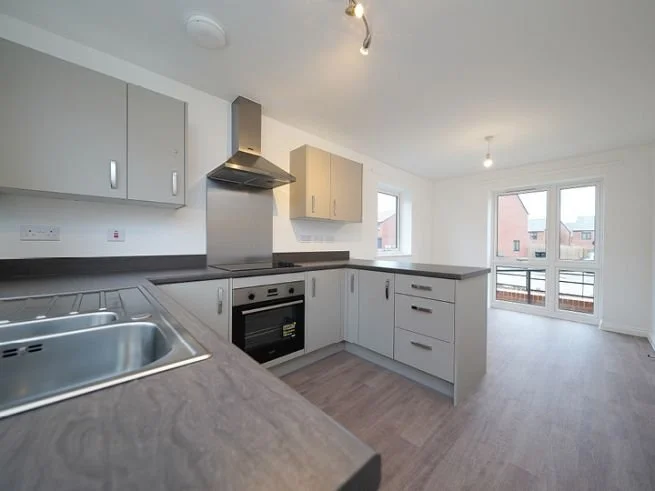
Stonewater Social Housing UK
What “social housing” means at Stonewater (and why it matters for health)
Adam defines social housing in the UK as housing that is more affordable than the open market and targeted to lower-income households or people with specific vulnerabilities. Stonewater delivers multiple affordability products, including social rent (often ~50–60% of market rent), affordable rent (up to ~80%), and shared ownership models that help households enter the property ladder progressively.
The reason this matters for the “healthy homes” conversation is straightforward: many of the most harmful housing conditions—poor indoor air, low-grade materials, poor thermal comfort—cluster at the lower end of the market. This is precisely where better standards can have the most meaningful human impact.
Stonewater’s “healthy homes” lens: comfort, air, affordability, and life outcomes
Stonewater’s healthy homes approach is framed less as a wellness add-on and more as a fundamentals-first model that helps residents thrive:
Thermal comfort and affordability-to-run (energy efficiency so residents can heat homes adequately)
Air quality, not just temperature
Space and flexibility, including dedicated home-working space post-pandemic
Recognition that a stable, warm, comfortable home supports education, work, and wellbeing outcomes
Importantly, Adam extends “health” beyond the dwelling itself: green space, high-quality public realm, public art, planting a tree per home, and edible planting where possible—interventions that build pride, outdoor time, and place attachment.
“Do the most for the most”: why consistency beats a handful of exemplar projects
A central operational insight in the episode is Stonewater’s preference to raise the baseline consistently rather than deliver a small number of showcase schemes.
Adam describes the tension: you can build 10% of homes to net-zero standards and 90% to code, or you can push 100% of homes somewhat above minimum standards. Stonewater’s logic is that consistent uplift benefits all residents more fairly and supports long-term asset stewardship.
He also notes a structural UK challenge: where regulation and policy are delayed or unclear (he references the yet-to-be-published Future Homes Standard), organisations that voluntarily push standards can incur additional costs that others avoid—affecting land competitiveness and delivery pipelines.
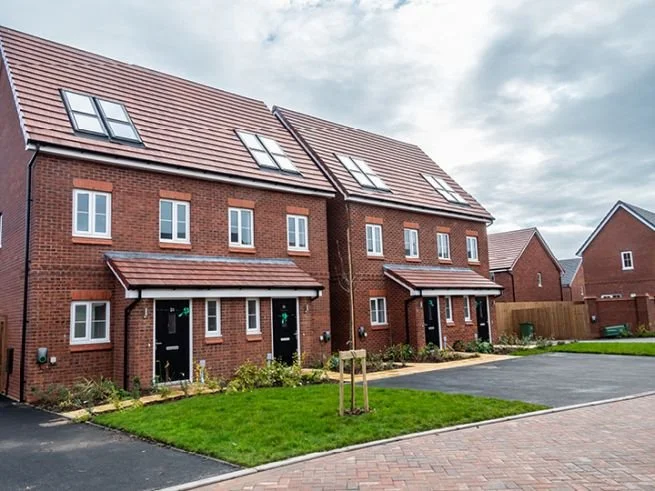
Stonewater Social Housing UK
A “build and hold” mindset changes the incentive structure
Unlike build-to-sell developers, social housing providers typically own and operate homes for decades. Adam points out that this makes future-proofing rational: if you own the asset long term, it is in your interest to avoid short-term decisions that create expensive retrofit obligations later.
One practical example: Stonewater decided in 2021 to stop using gas in new homes, because gas boilers are not compatible with long-term net-zero trajectories—yet the wider market can still install them under current rules.
Passive House: what it is, why it’s relevant, and what Stonewater learned
Adam gives a concise explanation of Passive House (Passivhaus): a performance standard aimed at delivering very low-energy, high-comfort homes through high insulation, airtightness, and typically mechanical ventilation with heat recovery (MVHR).
Stonewater used Passive House partly as a response to electrification challenges: in the UK, gas has historically been cheaper than electricity, so improving fabric performance becomes essential if you want low-carbon heating without pushing bills up.
Key learning: resident engagement. Passive House assumes a controlled environment and window-opening behaviours can conflict with the intended operation. There is also a cultural/psychological barrier: residents expect “heating systems,” even if a home barely needs active heating—so Stonewater installed electric heating in at least one scheme to maintain comfort and confidence.
He also describes a technical-perception issue in the UK: EPCs are produced using SAP modelling assumptions, and certain electric heating choices can adversely affect the EPC rating “on paper,” even where real-world comfort and energy performance are strong—creating a communications and perception challenge.
SHIFT and sustainable finance: when ESG measurement becomes an economic lever
A particularly useful segment covers SHIFT (Sustainable Housing Index for Tomorrow), described as a benchmarking tool tailored to social landlords. Unlike building-only standards, SHIFT takes a more holistic view: homes’ performance plus resident engagement, transport, waste, leadership, operations, and supply chain.
Adam explains two strategic benefits:
External verification and comparability with peers.
Direct linkage to sustainable finance: Stonewater uses SHIFT scores as KPIs within sustainability-linked loans. If they hit targets, they receive interest-rate benefits/rebates—creating an internal incentive loop that rewards measurable progress.
This is a powerful template for real estate organisations: measurement is not just reporting—it can become part of the capital stack.
The 10-year view: retrofit at scale, heat pumps, and decarbonising communal systems
Looking forward, Adam outlines a major focus on improving existing housing stock—thousands retrofitted already, with thousands more planned. A specific UK driver discussed is working towards minimum energy standards by 2030, targeting EPC C as a baseline across homes.
He also highlights:
Partnership with the UK government’s Department for Energy Security and Net Zero through Warm Homes funding programmes
Scaling heat pump deployment in existing homes
Innovation trials for decarbonising communal heating in blocks of flats and retirement schemes—often reliant on large gas boilers today
Improving supply-chain transparency and reducing single-use plastics in construction, acknowledging visibility as a real constraint
Adam also notes emerging potential in local renewables and local electricity networks—sharing/trading clean electricity across assets so residents in low-rise flats with limited PV potential can still benefit from low-cost, clean power.
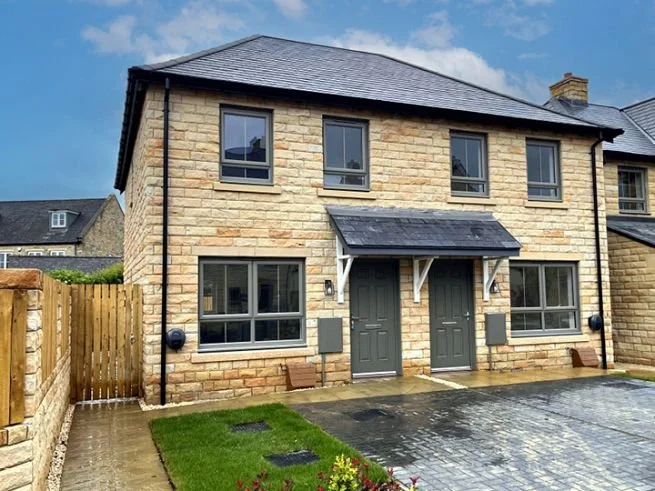
Stonewater Social Housing UK
Practical takeaways for developers, housing providers, and investors
“Healthy homes” is not a luxury-tier concept; it is arguably most impactful where residents face affordability constraints and health vulnerability.
Fabric-first performance (insulation, airtightness, ventilation) underpins decarbonisation without pushing bills up.
If you own the assets long term, avoiding stranded technologies (e.g., new gas boilers) is simply prudent risk management.
Standards that cover the organisation and the asset base can unlock more credible ESG narratives—and connect directly to financing terms.
Scaling retrofit requires supply-chain transparency, customer engagement, and workable policy signals—not only technical solutions.
FAQs
-
In this episode, healthy homes is framed as warm, energy-efficient, affordable-to-run housing with good air quality, adequate space and flexibility, plus supportive outdoor/public realm features that help residents thrive.
-
Passive House is a performance standard for very low-energy, high-comfort homes based on high insulation, airtightness, and typically MVHR to retain heat while ensuring good ventilation.
-
Because Passive House assumes a controlled indoor environment; residents may need guidance on ventilation behaviors (e.g., reliance on MVHR rather than window opening) and reassurance about heating expectations.
-
SHIFT is described as a benchmarking tool for social landlords that evaluates not only homes’ performance but also organisational strategy, operations, engagement with residents, waste, transport, and supply chain.
-
Stonewater links sustainability KPIs (including SHIFT scores) to sustainability-linked loans; meeting targets can reduce borrowing costs via interest-rate rebates/discounts.