

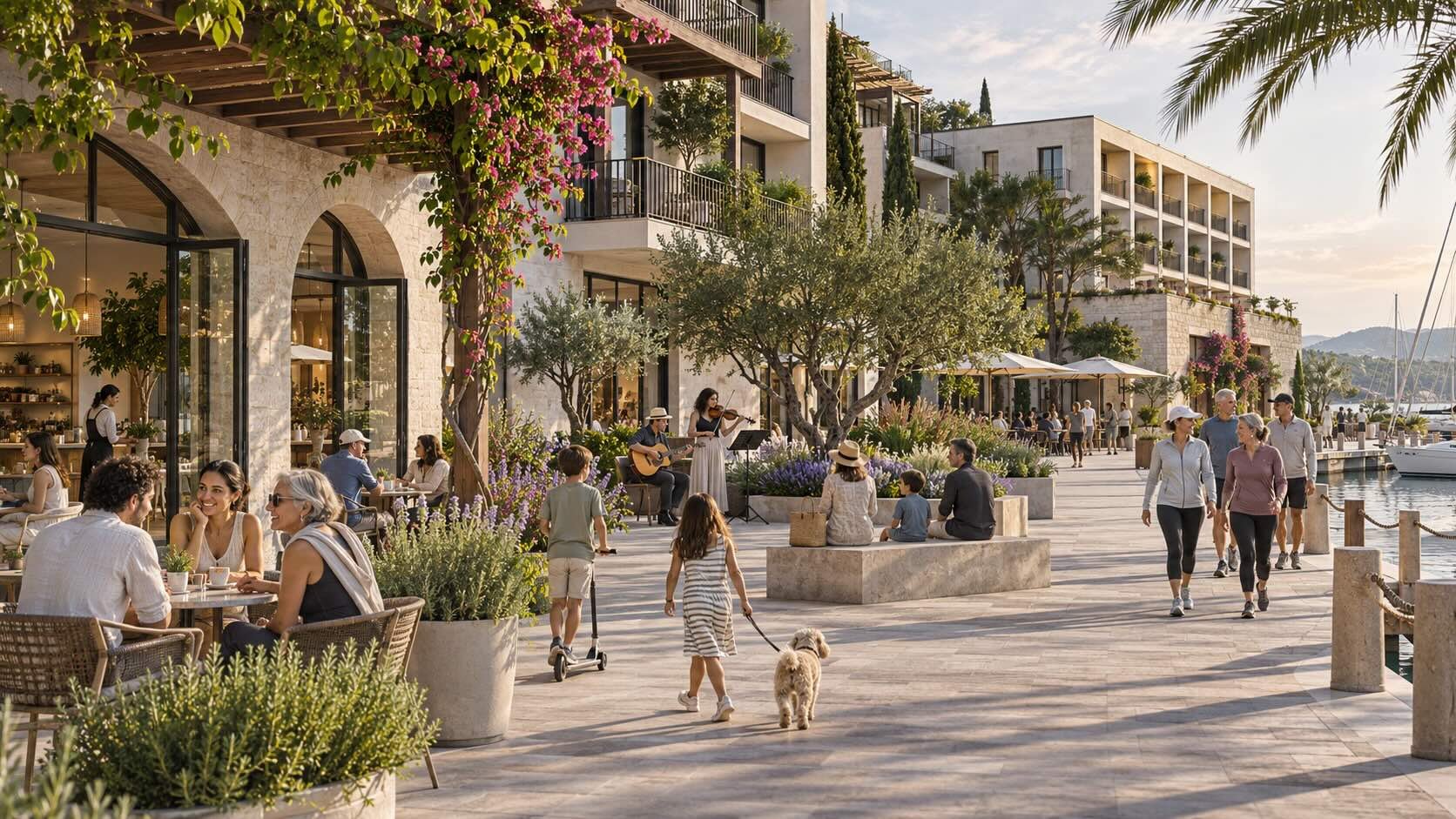
A mixed-use destination can have attractive public spaces, a strong tenant mix and a carefully defined brand, yet still feel quiet at the wrong times. The missing ingredient is often a consistent reason for people to return.
A community calendar helps turn a development from a collection of uses into a place with a recognisable rhythm. It gives residents, workers, hotel guests, visitors and neighbouring communities opportunities to share the destination. Done well, it also helps operators understand when spaces are used, which partnerships are valuable and where the experience needs to improve.
This is more than an events-marketing exercise. Programming affects the design and management of public space, the relationship between tenants, the use of a destination across seasons and the credibility of its positioning. It deserves attention before opening, while the physical and operating plans can still respond.
Begin with the people the destination needs to serve
The first question is not “What events could we put on?” It is “Who needs a reason to be here, and when?”
A residential waterfront, for example, might serve permanent residents, second-home owners, marina users, hotel guests, local families, office workers and seasonal tourists. Their needs overlap, but they do not follow the same timetable. An event programme designed principally for summer visitors may add energy for a few weeks while doing little for the people who live and work there throughout the year.
The calendar should therefore be built around patterns of use. Which audiences are present on weekday mornings? Who might visit after work? What brings local people in during quieter months? Where could residents and visitors participate together without making either group feel that the place is intended for someone else?
These questions help identify recurring activities that fit the destination. A morning walking group, a neighbourhood market, a programme of talks or a small cultural series can each serve a different purpose. The value lies in choosing them for a clear audience and a credible setting, rather than filling dates for the sake of activity.
Create a rhythm, not a succession of spectacles
Large events can introduce a destination to new audiences. They are less effective at establishing everyday life on their own.
A useful calendar combines several levels of programming: dependable weekly or monthly activities, seasonal changes and occasional larger moments. The recurring elements give people a reason to form habits. The larger events can broaden the audience and express the destination’s identity at a different scale.
The mix should also reflect the character of the place. A destination positioned around culture, landscape and healthy living should make those ideas visible through experiences people can actually take part in. That might mean local food, outdoor movement, creative workshops or activities linked to the waterfront. The programme needs to feel specific to its setting, rather than transferable to any new development.
Not every activity has to attract a crowd or generate direct ticket income. A small, well-attended recurring session may do more to establish belonging than an expensive one-off event. Equally, a calendar composed entirely of intimate activities may fail to give the destination wider visibility. Both have a role, provided their purpose is understood.
Design the place for the programme it is expected to host
Programming exposes practical weaknesses in a masterplan quickly. A square that looks generous in a rendering may have nowhere discreet to store furniture. A waterfront promenade may be attractive for gatherings but difficult to service. A courtyard intended for evening activity may sit directly beneath residential bedrooms.
Before promising a calendar, the team should test the spaces against the activities proposed. Consider access, shade, weather protection, power, water, toilets, storage, loading, waste, acoustics, accessibility, security and the relationship with neighbouring uses. The timing of an activity matters as much as its location: a lively event that works at lunchtime may be unsuitable late in the evening.
Retail and hospitality operators also need to be involved. A programme intended to increase visits is less valuable if nearby businesses are closed, unprepared for demand or unable to participate. Conversely, an activity planned only around a single operator’s commercial needs may feel less like a shared destination offer.
This is why the community calendar should inform public-realm and ground-floor planning early. It can reveal where flexible space is needed, which routes must stay clear and how different activities can coexist without compromising the everyday experience of the place.
Give the calendar an owner, a budget and room to evolve
A calendar cannot rely indefinitely on the enthusiasm of a launch team. Someone needs responsibility for its priorities, partners, delivery and evaluation.
In a mixed-use development, that responsibility may cross asset management, residential management, hospitality, retail leasing, marketing and community relations. The operating structure should establish who approves activities, who pays for them, who manages risk and who has authority to adapt the programme. Local businesses and cultural or community organisations can be valuable partners, but partnerships still require coordination.
Success should be assessed against the reason each activity exists. Attendance is useful, but it is only one measure. Depending on the objective, the team might also examine repeat participation, local versus visitor attendance, use during quieter periods, tenant involvement, feedback from residents and the quality of partnerships formed. Commercial effects should be investigated carefully rather than assumed from a busy-looking space.
The calendar will change as the destination matures. Early programming may need to introduce the place and bring different audiences together. Over time, established groups, businesses and residents may take a greater role in shaping what happens. The operator’s job becomes one of stewardship as well as production.
Start before the destination opens
Programming works best when relationships are already forming before the first major opening. The development team can identify potential partners, listen to neighbouring communities and test modest activities while parts of the site are still emerging. That early work can reveal demand and operational constraints that a finished launch calendar would otherwise miss.
At Porto Montenegro, GHP’s long-term destination work included cultural programming and partnerships alongside the evolution of the wider waterfront offer. The broader lesson is that a destination’s social life cannot be delivered by architecture or branding alone. It needs people, organisations and a sustained operating commitment.
For developers, the community calendar is therefore a strategic tool. It connects positioning to lived experience, tests whether public spaces can support their intended uses and provides a practical way to build a destination over time.
Green Healthy Places works with developers and destination owners on positioning, mixed-use strategy, placemaking and the programmes that bring places to life.
If you are defining a new destination or reconsidering how an existing one is used, contact GHP to discuss the strategy before the calendar is fixed.