

Podcast Episode 88: The Rise of Wellness Clubs and What It Means for Fitness Space Design
In Episode 88 of the Green Healthy Places podcast, I share a condensed trend briefing adapted from a recent presentation I delivered at the Health & Fitness Association Congress in Amsterdam. The focus is one of the clearest shifts I’m seeing in client briefs right now: traditional “health clubs” evolving into wellness clubs—and, in some cases, social wellness clubs.
These new concepts are not only adding more “wellness” features; they are changing how we plan floor space, how we design member journeys, and how operators create new revenue streams beyond the gym floor.
If you’re a developer, hotelier, operator, architect, or designer working on fitness and wellness amenities, this episode is a practical snapshot of what’s showing up in real briefs today—what it means spatially, operationally, and commercially.
Listen to Episode 88
Spotify: https://open.spotify.com/show/0OoHv8oT95NNWFgraVSp8v
Apple Podcasts: https://podcasts.apple.com/es/podcast/green-healthy-places/id1522838324
Episode highlights
Why contrast bathing (cold + heat + shower + chill-out) is moving from “nice-to-have” to a core part of the wellness club product. postproduction-run-at-2025-11-2…
How “social” and “experiential” saunas are being designed differently—capacity, lighting, music, and guided sessions matter. postproduction-run-at-2025-11-2…
The operational and cultural realities of inclusive / non-inclusive changing and wet-area design across markets. postproduction-run-at-2025-11-2…
Why a diagnostics room is increasingly part of a modern wellness club, positioning the club between a gym, clinic, and pharmacy. postproduction-run-at-2025-11-2…
The rise of recovery zones as an operationally “light-touch” wellness offer—often tech-led and self-directed. postproduction-run-at-2025-11-2…
How Hyrox is changing functional-zone planning, equipment selection, and spatial logic. postproduction-run-at-2025-11-2…
The evolution of outdoor gyms into true indoor/outdoor hybrids in climates that allow it. postproduction-run-at-2025-11-2…
The growing overlap between fitness and leisure—basketball courts, e-gaming, and social play elements aimed at younger audiences. postproduction-run-at-2025-11-2…
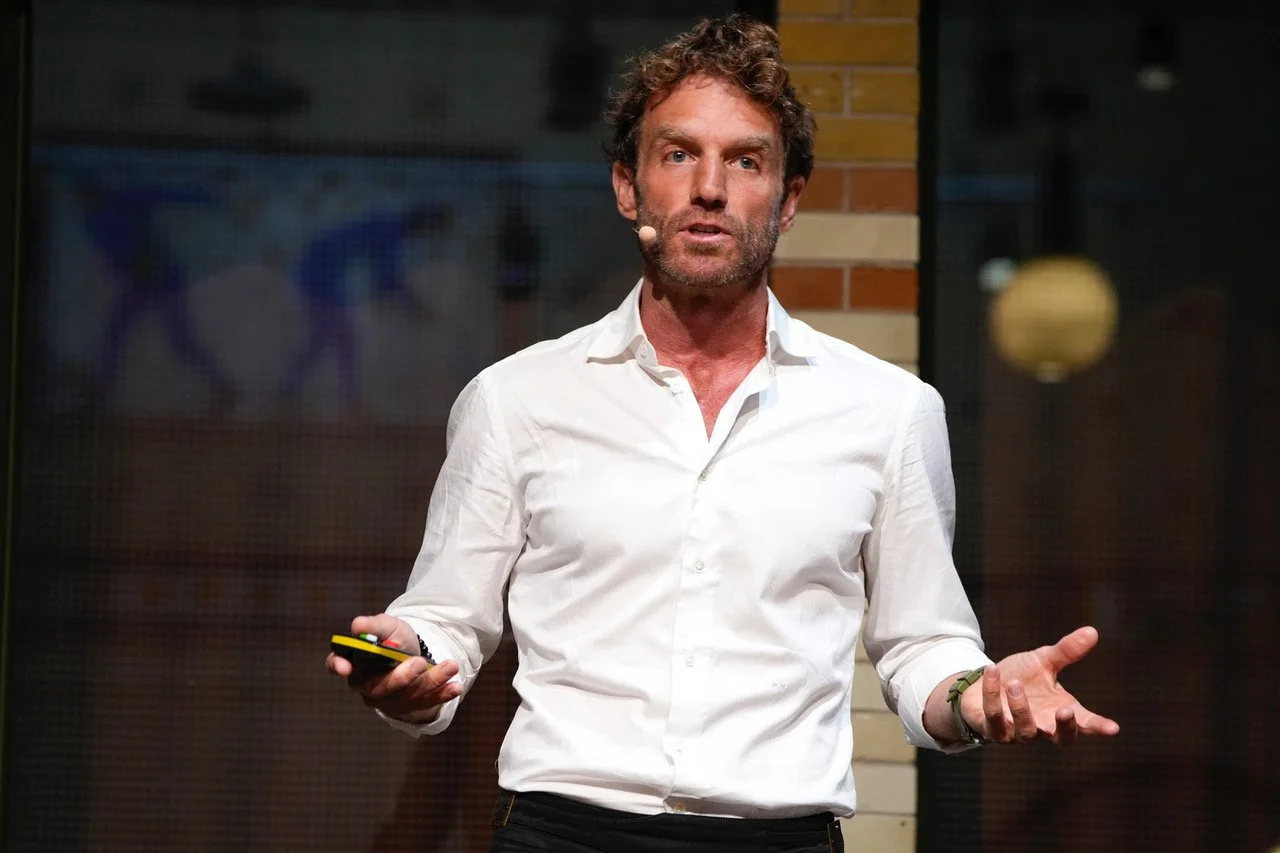
Matt on stage at the Health Fitness Association’s European Congress in Amsterdam, October 2025
What is a “wellness club” in practice?
A wellness club is best understood as a fitness destination that expands beyond training into a broader health and wellbeing ecosystem—often with stronger emphasis on recovery, experiential heat/cold, technology-enabled health optimisation, and lifestyle-led programming.
In this episode I break the shift into seven practical components showing up repeatedly in briefs:
Contrast bathing
Experiential / social saunas
Inclusive vs non-inclusive changing and wet-area planning
Diagnostics and healthspan services
Recovery zones
Hybrid training influenced by Hyrox
Outdoor gyms and broader leisure formats postproduction-run-at-2025-11-2…
1) Contrast bathing: designing the full circuit, not just an ice bath
Contrast bathing is often misunderstood as “a cold plunge next to a sauna.” In reality, the experience requires a sequence and the right adjacencies:
Hot (sauna)
Cold (plunge / ice bath)
Shower (used repeatedly between heat and cold)
Chill-out / regulation zone (where body temperature normalises before repeating) postproduction-run-at-2025-11-2…
At small scale (e.g., residential or compact clubs) this can be a simple pairing. At larger wellness club scale, the model depends heavily on cultural norms: some markets require duplicated male/female wet areas, while others can combine into one larger, shared footprint. postproduction-run-at-2025-11-2…
A detail worth noting from the episode: offering multiple cold temperatures can broaden appeal and reduce intimidation for first-time users (e.g., a “range” rather than one extreme option). postproduction-run-at-2025-11-2…
2) Experiential saunas: capacity, ambience, and “social design”
A four-to-six person sauna rarely becomes a social space. Once the sauna scales to 10–30 people, the experience can be intentionally designed:
More personal space between users
Mood lighting that supports comfort (not a harsh, silent box)
Background music (well-selected)
Aromatherapy
Visual focal points / design elements
Optional guided sessions to shape behaviour and reduce awkwardness postproduction-run-at-2025-11-2…
The key takeaway: experiential sauna is not a marketing label. It is an experience design exercise that depends on capacity, programming, and ambience—not just timber cladding.
3) Inclusive design: the changing-room question that affects everything
Wellness clubs are making different choices about inclusive design based on location, target demographic, and brand positioning.
One increasingly common model is the unisex changing concept:
Communal basins / lockers / mirrors
Fully private individual changing + shower cubicles
This can reduce square metres allocated to changing facilities, but it must be aligned with what the target market is comfortable with—or it risks losing members who prefer more traditional separation. postproduction-run-at-2025-11-2…
A second model—used in some banya-style concepts—is operational: one set of changing facilities, but wet area access split by schedule (e.g., men’s day / women’s day). postproduction-run-at-2025-11-2…
In other markets, separation is simply required by norms and expectations. The planning implication is material: you either duplicate functions or rethink the product mix to maintain efficiency.
4) Diagnostics: the gym becomes a health access point
A major strategic shift is the appearance of a diagnostics room inside the wellness club. At the high end, longevity clinics may include advanced scanning; in the more scalable wellness club context, the trend points towards:
On-demand health screening
Telehealth stations
Spaces for virtual consultations (sports medicine, nutrition, mental health) postproduction-run-at-2025-11-2…
The design implication is that the club is no longer only a training venue. It moves into the territory between fitness, clinic, and pharmacy—with obvious impacts on reception flow, privacy, acoustic requirements, and the overall member journey. postproduction-run-at-2025-11-2…
5) Recovery zones: premium wellness without spa-style staffing
Recovery is becoming a distinct allocation of space—often approaching parity with traditional spa areas. Examples discussed include:
Red light therapy
PEMF
Body rollers / compression devices
Meditation pods
Floatation tanks
Mid-temperature pools and hydrothermal features
Magnesium baths
Large-format saunas and contrast bathing postproduction-run-at-2025-11-2…
What makes these commercially attractive is operations: many recovery tools are self-directed or tech-enabled, reducing reliance on therapist-heavy staffing models while still delivering a high-perceived-value member experience. postproduction-run-at-2025-11-2…
6) Hybrid training: how Hyrox is changing functional zone briefs
A few years ago the reference point for functional training was often CrossFit-style layouts. Increasingly, clients reference Hyrox, which changes the planning logic:
More specific equipment set
More repetition (treadmills, rowers, sled push/pull, wall-ball targets, medicine balls)
More weight options within a narrower equipment universe postproduction-run-at-2025-11-2…
From a design perspective, there’s a tension here: aligning with a trend without over-committing a facility to a brand identity that may shift in 3–5 years. The planning response is to capture the training logic while keeping flexibility. postproduction-run-at-2025-11-2…
7) Outdoor gyms and leisure: the club as lifestyle platform
Outdoor gyms surged post-Covid and are now evolving beyond basic equipment clusters. The trend is toward indoor/outdoor hybrids:
Integrated storage solutions (container-like systems)
Dome-like semi-permanent covers
Equipment offers that begin to resemble an indoor gym—where climate allows postproduction-run-at-2025-11-2…
In parallel, we are seeing broader leisure elements integrated into wellness club ecosystems—especially in co-living, hospitality, and Gen Z-oriented concepts:
Indoor basketball courts (often multi-use)
E-gaming spaces
Play-led social zones postproduction-run-at-2025-11-2…
The bigger shift: reception becomes the “health optimisation portal”
One of the most important signals is where these trends converge: the front-of-house.
Reception, retail, F&B, diagnostics, and health optimisation services increasingly overlap. That is consistent with the broader “medicine 3.0” direction described in the episode: the club becomes an entry point into prevention, personalised insights, and healthspan-led services—not just exercise and community.
FAQ
What is a wellness club?
A wellness club is a fitness destination that expands beyond training to include recovery, heat/cold circuits, experiential wellness, and often diagnostics or health optimisation services—creating a more holistic member experience.
What is contrast bathing, and why is it popular?
Contrast bathing is alternating between heat (sauna), cold (plunge/ice bath), and showers, with rest intervals. It’s popular because it’s experiential, social when scaled appropriately, and closely linked to recovery culture.
What makes a sauna “experiential” or “social”?
Scale and ambience. Larger capacity saunas combined with mood lighting, music, aromatherapy, and sometimes guided sessions can transform a sauna into a designed experience rather than a silent hot room.
Why are diagnostics appearing in wellness clubs?
Because clubs are moving toward prevention and personalised health services—screening, telehealth, and virtual consultations—positioning the club closer to a health access point than a traditional gym.
How is Hyrox influencing gym design?
Hyrox drives more specific functional training layouts and equipment choices (sleds, rowers, wall-ball targets, treadmills) with repetitive station-based planning—often influencing space programming and brand references.