

Repositioning a destination: when the original strategy is no longer enough
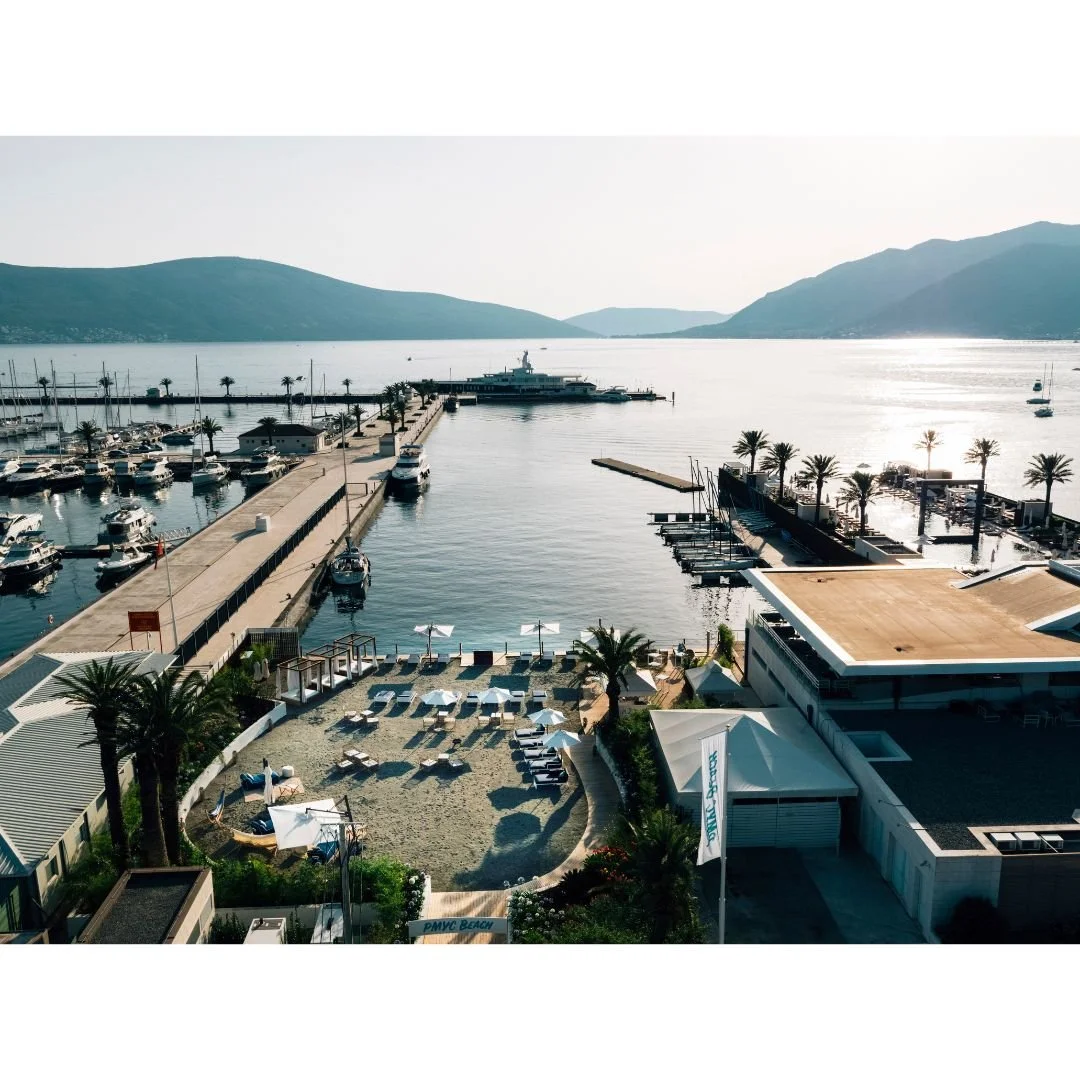
Porto Montenegro Beach Club, Pool Club and superyacht marina
Mixed-use destinations are rarely static. The market conditions, audiences and assumptions that shape a project during its launch phase can look very different five or ten years later, based on on my own experience.
This is particularly true of marina, waterfront and resort developments, where residential sales, hospitality, tourism, local air lift, retail, leisure and public realm all interact.
A development may have been commercially successful in selling its component parts yet still struggle to create a compelling destination. Equally, a destination can successfully establish itself around an initial group of buyers and visitors before gradually outgrowing the positioning that helped launch it.
In both cases, there comes a point when the original strategy needs to be reassessed.
The question is not necessarily how to reinvent the destination. It is how to understand where the place is now, which of the original assumptions still hold, and what needs to evolve for its next phase. This is repositioning.
Start with the original development thesis
Every mixed-use destination contains an implicit social and economic model.
The residential component might provide a permanent or seasonal population. Hotels introduce visitors. A marina brings boat owners, guests and crew. Restaurants and retail serve those audiences while attracting people from outside the development. Amenities, landscape and public realm provide reasons to spend time there, while events and programming create additional activity throughout the year.
On paper, the individual components can appear convincing. The more important question is how they are expected to work together.
Who was supposed to live there? Who would visit? What would generate activity during the week rather than simply at weekends? Who would support restaurants and retailers outside the peak season? What would persuade someone who did not own property there to visit regularly?
These assumptions are fundamental to destination strategy, but they are still only ‘assumptions’. Once a destination becomes operational, it starts producing evidence of its own and this is where we need to be honest with ourselves.
A successful real estate development does not automatically create a successful destination
Consider a Mediterranean marina development where a substantial residential component is successfully sold to international investors.
From a real estate perspective, the sales programme may have performed exactly as intended. But suppose many of those apartments subsequently remain unoccupied for much of the year. Some might enter the rental market, others may be used for only a few weeks, while others remain largely dormant. The lights are off, all year round.
The buildings are there and the units have been sold, but the resident population anticipated by the original masterplan has not materialised. No residential community takes shape. That changes the dynamics of everything around them.
There is less everyday activity in the public realm, a smaller recurring customer base for restaurants and retail, fewer opportunities for spontaneous social interaction and less of the visible human activity that gives a place a sense of community.
This illustrates an important distinction in mixed-use development: real estate occupancy, real estate sales and destination success are not the same thing. The appropriate response is not necessarily to build more.
The more useful question may be: what populations, activities and uses could generate the life that the original development model expected the residential community to provide?
Hospitality guests, local residents, marina users, workers, families, sports and wellness members, restaurant customers, events audiences and longer-stay visitors can all contribute in different ways. The right combination will depend on the particular destination of course but certain key principles do exist.
The strategic challenge is to rebuild the human ecosystem rather than simply fill the remaining spaces on a masterplan.
Sometimes the original strategy worked — and the destination simply outgrew it
There is another reason why repositioning becomes necessary.. the original strategy may have worked extremely well!
My own experience with Porto Montenegro illustrates this. I was involved with the destination over a period of nine years, including four years as Head of Marketing and five as Fractional Brand Director, and saw first-hand how dramatically the addressable market for a new destination can evolve as the place itself matures.
During the early phases, the UK and Russia were particularly important source markets. This made sense for an emerging luxury marina destination in Montenegro at that point in its development, a largely unknown destination on the luxury travel map back then. Over time, however, the situation changed.
The destination became more established internationally. Air connectivity improved and diversified. Hospitality, F&B and lifestyle components matured. New audiences discovered Montenegro. External geopolitical circumstances changed the relative accessibility and importance of certain markets.
Gradually, the destination became considerably more geographically diverse than would have been realistic to anticipate during its initial launch. That evolution is not a failure of the original positioning. In many respects, it is evidence of its success!
A launch strategy has a particular job to do: identify credible early adopters, establish a proposition in the market and generate enough momentum for a new destination to become viable. Once that has happened, the strategic questions change.
Different phases require different strategies
There is no universal lifecycle that every destination follows, but there is usually a recognisable progression from launch and establishment towards diversification and maturity.
During the launch phase, the emphasis may be relatively concentrated. Which markets are most likely to understand the proposition? Where can early buyers and visitors realistically be found? How can the destination establish credibility?
As the project becomes established, actual behaviour begins to replace some of those initial assumptions. Certain products outperform expectations, new audiences emerge and some parts of the original proposition prove more important than others.
The next phase is often one of diversification. A destination that depended heavily on one or two source markets, seasons or customer groups may need a broader base. Improved accessibility, new hotels, additional amenities or a growing international reputation can all open opportunities that did not exist at launch.
Eventually, a more mature destination faces a different challenge again: maintaining relevance. The question is no longer simply how to establish the place, but how to keep its experience, audiences and commercial proposition evolving.
At certain points in this lifecycle, a deliberate repositioning exercise becomes valuable.
The world around the destination changes too
Not all change originates within the development. Geopolitics can alter the viability of an important source market almost overnight. New air routes can suddenly make a destination accessible to entirely different audiences. Visa regimes change. Competing destinations emerge. Consumer expectations evolve. Climate and seasonality influence when and how places are used.
The growth of wellness, active lifestyles, remote working and experience-led hospitality has also changed what many residents and visitors expect from a destination compared with a decade ago. A masterplan may remain largely fixed, but the environment in which it operates does not.
This is why destination strategy should be understood as an iterative process rather than a document completed at the beginning of a development and subsequently left untouched.
So where should a repositioning exercise start?
Before proposing new amenities, redesigning public spaces or commissioning a re-branding exercise, it is useful to return to a small number of fundamental questions.
What was the original intent?
Who was the destination created for, what was expected to drive activity and which assumptions supported the original development model?
What is the current reality?
Who actually lives, stays, visits and spends time there? Which parts of the destination perform well and which remain underused? How is the place perceived today?
Where is the structural gap?
Which original assumptions proved inaccurate? Which were successful but have subsequently become less relevant? What has changed in the wider market?
What should the next proposition be?
Given the assets, audiences and opportunities that exist today, what is the most credible and valuable future for the destination?
Which interventions can create the greatest uplift?
Only then should the conversation move towards public realm, hospitality, F&B, wellness, landscape, mobility, events, programming, leasing, amenities, communications or physical redevelopment.
Repositioning does not necessarily mean redevelopment
There can be a tendency to associate destination improvement with capital expenditure. Sometimes significant redevelopment will be justified. But in other cases, relatively modest interventions can materially change how a place functions and is perceived.
A stronger restaurant or hospitality offer may introduce a new audience. Better programming can create reasons to visit outside peak periods. Landscape and public realm interventions can transform how existing spaces are used. A sports or wellness proposition can generate recurring local participation rather than occasional tourism. Changes to leasing, mobility or events can increase activity without requiring substantial new construction.
The objective is not to add as much as possible. It is to identify which changes respond to the underlying problem and can create disproportionate value. That requires diagnosis before design.
A destination is never really finished
Perhaps the most important lesson from working with destination developments over the long term is that they cannot be treated in quite the same way as conventional real estate assets.
Buildings can be completed but destinations continue to evolve.
Their audiences change, accessibility changes, competitors change and the people using them gradually establish patterns of behaviour that could never have been completely predicted during masterplanning.
The positioning that successfully launches a destination is therefore not necessarily the positioning that should carry it through its next decade.
A good repositioning strategy does not discard the original vision simply for the sake of change. It identifies what remains valuable, acknowledges what did not develop as expected and responds to opportunities that only became visible once the destination had matured.
The starting point is deceptively simple: What was this place supposed to become, what has it actually become, and what does it need to become next?