

Why Arrival Sequences Matter in Premium Placemaking
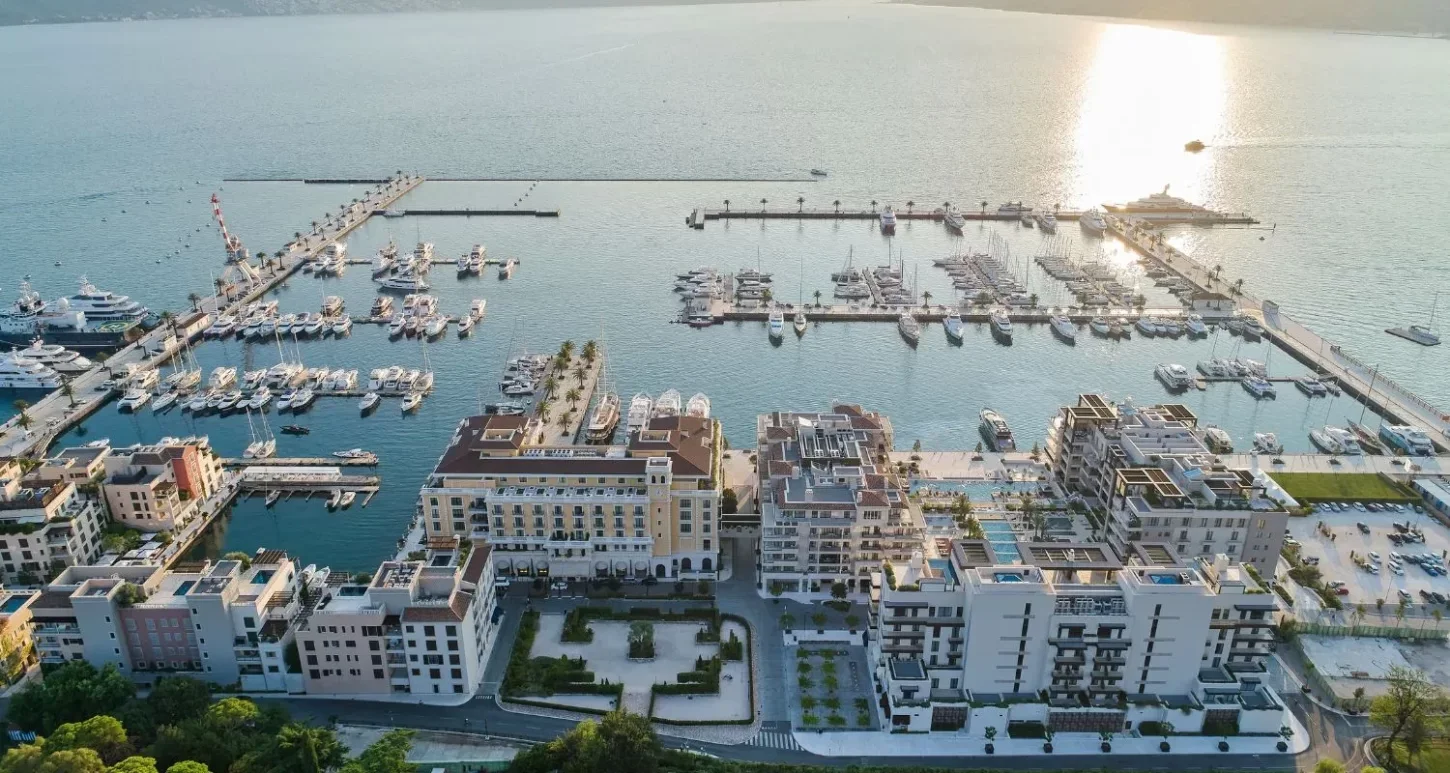
south village, porto montenegro, montenegro - showing multiple entrances into the site
In premium real estate, hospitality and mixed-use development, a great deal of attention is often given to architecture, interior design, leasing strategy and brand positioning. All of these matter. But there is one part of the user experience that is still too often under-designed, under-prioritised or treated as secondary - the arrival sequence.
Arrival is not simply the point at which someone reaches a front door. It is the transition from outside to inside, from public to semi-public, from movement to destination. It begins earlier than many teams assume and communicates more than most realise.
In practice, arrival is one of the most powerful moments in placemaking because it shapes the first emotional reading of a place. Before a resident enters the lobby, before a guest checks in, before a visitor sits down for lunch or steps into a retail environment, they are already making judgments. They are reading cues about quality, coherence, care and identity. That reading starts with the approach.
First impressions are spatial, not just visual
When people talk about first impressions, they often mean what a place looks like. But arrival is not only visual. It is spatial and experiential.
A good arrival sequence creates orientation. It signals hierarchy. It gives a sense of welcome. It helps a place feel resolved and intentional. It reduces friction and ambiguity. Above all, it shapes how the destination is felt at ground level.
This is why arrival sequences matter so much in premium placemaking. They are not decorative extras. They are part of how people understand the quality and character of a place within the first few seconds of contact.
That can be communicated through many things: the framing of an entrance, the quality of the paving, the composition of the planting, the transition from road to pedestrian space, the degree of softness or enclosure, the clarity of the path, the relationship between buildings and open space, and the consistency of the materials and public realm language.
When these elements work together, arrival feels effortless. When they do not, even a high-value destination can feel less premium than intended.
Many places underperform at the threshold
One of the reasons arrival sequences are overlooked is that they sit between disciplines.
They are partly landscape, partly architecture, partly public realm design, partly wayfinding, partly operations and partly brand expression. Because they do not belong neatly to one category, they often receive less strategic attention than they deserve.
The result is familiar. The architecture may be strong, but the immediate approach feels generic. The destination may aspire to a luxury position, but the gateway experience feels flat. A waterfront development may have strong views and a good tenant mix, yet the threshold moments between one zone and another feel unresolved. Planting may be present, but not composed in a way that strengthens entry or frames movement.
These are not always dramatic failures. More often, they are missed opportunities.
But in premium placemaking, missed opportunities at arrival matter a great deal, because they influence how everything that follows is perceived.
Arrival carries brand and positioning
A well-designed arrival sequence does not just help people find their way. It signals what kind of place this is.
Is the destination formal or relaxed? Curated or generic? Hospitality-led or purely functional? Mediterranean, urban, resort-like, residential, commercial, or some combination? Does it feel calm, premium and confident, or fragmented and under-managed?
Much of this is communicated before a single sign is read.
That is why arrival should be understood as part of brand expression. In higher-end settings, brand is not only communicated through visual identity, tenant names or marketing language. It is also communicated through the physical experience of approaching and entering the place.
A strong arrival sequence reinforces that identity. A weak one dilutes it.
This is particularly important in mixed-use development, where multiple uses and audiences coexist. Residents, hotel guests, restaurant customers, office occupiers, shoppers and passers-by may all encounter the same destination in different ways. Arrival helps create a shared sense of place across those different journeys.
What makes an arrival sequence work?
There is no single formula, but strong arrival sequences usually have a few things in common.
They establish hierarchy. Not every edge or entrance is treated the same way. The most important thresholds are given the strongest definition.
They create legibility. People understand where they are meant to go, where the destination begins, and what kind of experience is unfolding.
They use material and planting changes to mark transition. This might mean a richer landscape composition, a change in paving tone or texture, a more refined planter language, or a stronger sense of enclosure and framing.
They support emotional tone. A good arrival can make a place feel generous, calm, polished, lively or exclusive, depending on the intended character.
And they are selective. The best arrival design is not necessarily the most elaborate. It is the most intentional. Often, a few well-judged moves do more than a long list of visual additions.
Planting plays an important role
Planting is particularly powerful in arrival sequences because it can do several things at once.
It can frame an approach. It can soften hard edges. It can create rhythm and layering. It can increase perceived care and richness. It can differentiate a premium threshold from a more generic public edge. It can also help tie the arrival sequence into the wider landscape identity of the place.
However, planting only helps when it is handled strategically. Random pots, inconsistent planter types, weak composition or underscaled planting can easily undermine the intended effect. In those cases, greenery is present, but the threshold still lacks clarity or presence.
The issue is not whether planting exists. It is whether it supports the arrival experience.
In premium developments, that often means stronger structure, better consistency, higher-quality planter language, more deliberate placement and a clearer relationship between the planting and the path of movement.
Why developers should over-prioritise arrival
From a strategic perspective, arrival usually deserves more attention than its footprint might suggest.
This is because threshold moments have outsized influence. A relatively small area can shape the perception of the whole destination. A better entrance sequence can make the wider public realm feel more coherent. A stronger gateway can lift the image of an entire commercial cluster. A more carefully composed hotel frontage can reinforce the value of the hospitality offer before anyone steps inside.
In this sense, arrival is one of the highest-return areas for placemaking investment.
That does not mean every project needs a grand formal entrance. It does mean that the most important arrival points should be identified and treated as high-value public realm interventions rather than afterthoughts.
Where budget is limited, this becomes even more important. Improving one or two threshold moments well can often create more uplift than scattering small upgrades across the site.
Arrival sequences need to be specific
One of the practical mistakes often made in planning public realm improvement is talking about arrival in broad abstract terms. It is more useful to identify the specific threshold moments that matter most.
Which hotel frontage forms the main guest impression? Which pedestrian route provides the most important transition into the destination? Which retail or restaurant cluster depends on a stronger sense of threshold and welcome? Which public square or waterfront edge needs better framing to feel complete?
Answering these questions turns arrival from a general design aspiration into a strategic list of intervention points.
That is when it becomes implementable.
Final thought
In premium placemaking, arrival is not a minor detail. It is one of the clearest opportunities to shape perception, strengthen identity and improve the experience of a place from the very first step.
It deserves attention not because it is flashy, but because it is foundational.
A destination can have strong architecture, good uses and a compelling brand narrative, yet still feel slightly underwhelming if the threshold experience is weak. Equally, a well-composed arrival sequence can elevate the whole reading of a place, often with relatively focused intervention.
That is why arrival sequences matter.
They are where placemaking begins.