

Reimagining Public Realm in Waterfront Developments: A Strategic Framework for Experience, Identity and Value
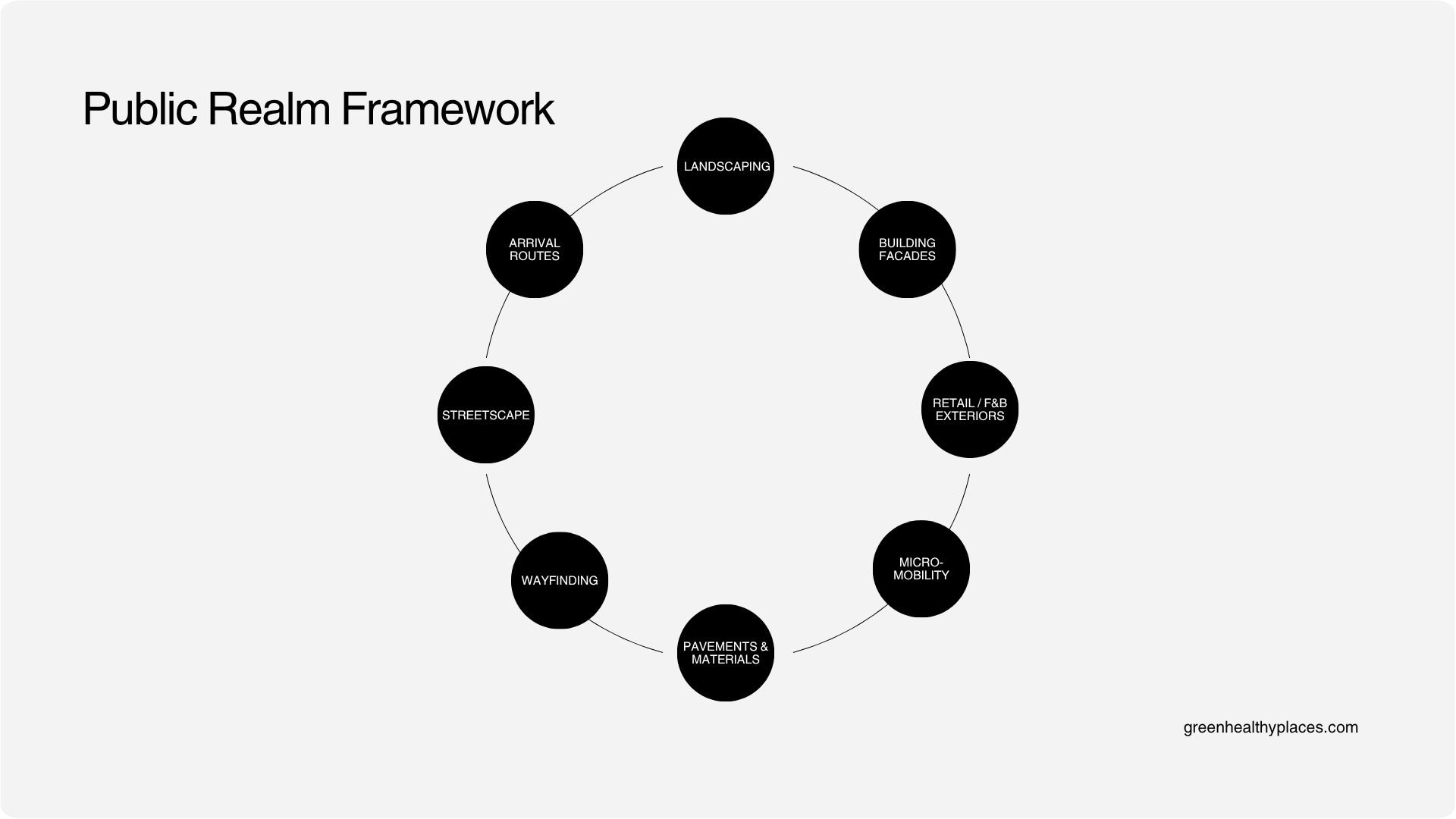
our framework for designing a successful public realm in waterfront developments
Waterfront developments are often positioned as premium destinations—offering a unique combination of climate, views and lifestyle. Yet, in many cases, the public realm falls short of its potential.
Despite strong architecture and high-quality real estate, the everyday experience of moving through these environments—arriving, navigating, dwelling—can feel fragmented, inconsistent or underwhelming.
This is not a design problem in isolation. It is a strategic coordination challenge.
Based on recent advisory work on a Mediterranean waterfront destination, this article outlines a practical framework for upgrading public realm experience, with direct implications for developers, operators and asset managers.
The Common Problem: Fragmented Experience
Across many mixed-use and waterfront developments, similar issues emerge:
weak or undefined arrival sequences
inconsistent landscape identity and planting strategy
signage systems that are reactive rather than integrated
material inconsistency across the public realm
underutilised or inactive spaces between buildings
Individually, these may seem minor. Collectively, they reduce:
perceived quality
ease of navigation
dwell time and commercial engagement
The result is a destination that looks strong in plan, but feels less coherent on the ground.
A Strategic Framework for Public Realm Enhancement
To address these challenges, it is useful to move away from isolated interventions and adopt a structured, design-led framework.
A clear and repeatable approach can be organised around four key pillars:
1. Arrival Experience
The arrival moment is one of the most powerful drivers of perception.
In many developments, key entry points are treated as circulation spaces rather than curated experiences.
A stronger approach includes:
defined spatial sequences that guide movement intuitively
integrated planting, lighting and signage at gateways
clear visual hierarchy between primary and secondary entrances
A well-designed arrival does more than orient users—it establishes immediate confidence in the quality of the destination.
2. Wayfinding and Legibility
Wayfinding is often approached as a signage exercise. In reality, it is a spatial and experiential system.
Effective wayfinding combines:
clear sightlines and spatial cues
consistent signage families and placement logic
alignment with landscape and architectural elements
Rather than adding more signs, the goal is to create a legible environment, where movement feels intuitive and frictionless.
3. Landscape and Placemaking
Landscape should not be treated as decoration. It is a primary tool for structuring space, defining identity and enhancing comfort.
A strategic landscape approach typically includes:
a coherent, climate-appropriate planting palette
layered planting (trees, shrubs, perennials, groundcover) to create depth and hierarchy
activation of underused areas through planting and spatial definition
integration with terraces, seating and pedestrian routes
In Mediterranean contexts, this also means prioritising:
drought-tolerant species
textural richness over excessive seasonal colour
long-term durability and low maintenance
Done well, landscape becomes a framework for experience, not just a visual layer.
4. Material and Streetscape Quality
The public realm is often undermined by inconsistent or aging materials:
mismatched planters
visible technical elements
low-quality finishes in high-visibility areas
A more controlled approach introduces:
a clear hierarchy of materials
premium finishes in key zones (arrival points, waterfront, retail frontages)
more relaxed, context-appropriate materials in secondary areas
Consistency here is critical—it directly influences how the destination is perceived in terms of quality and coherence.
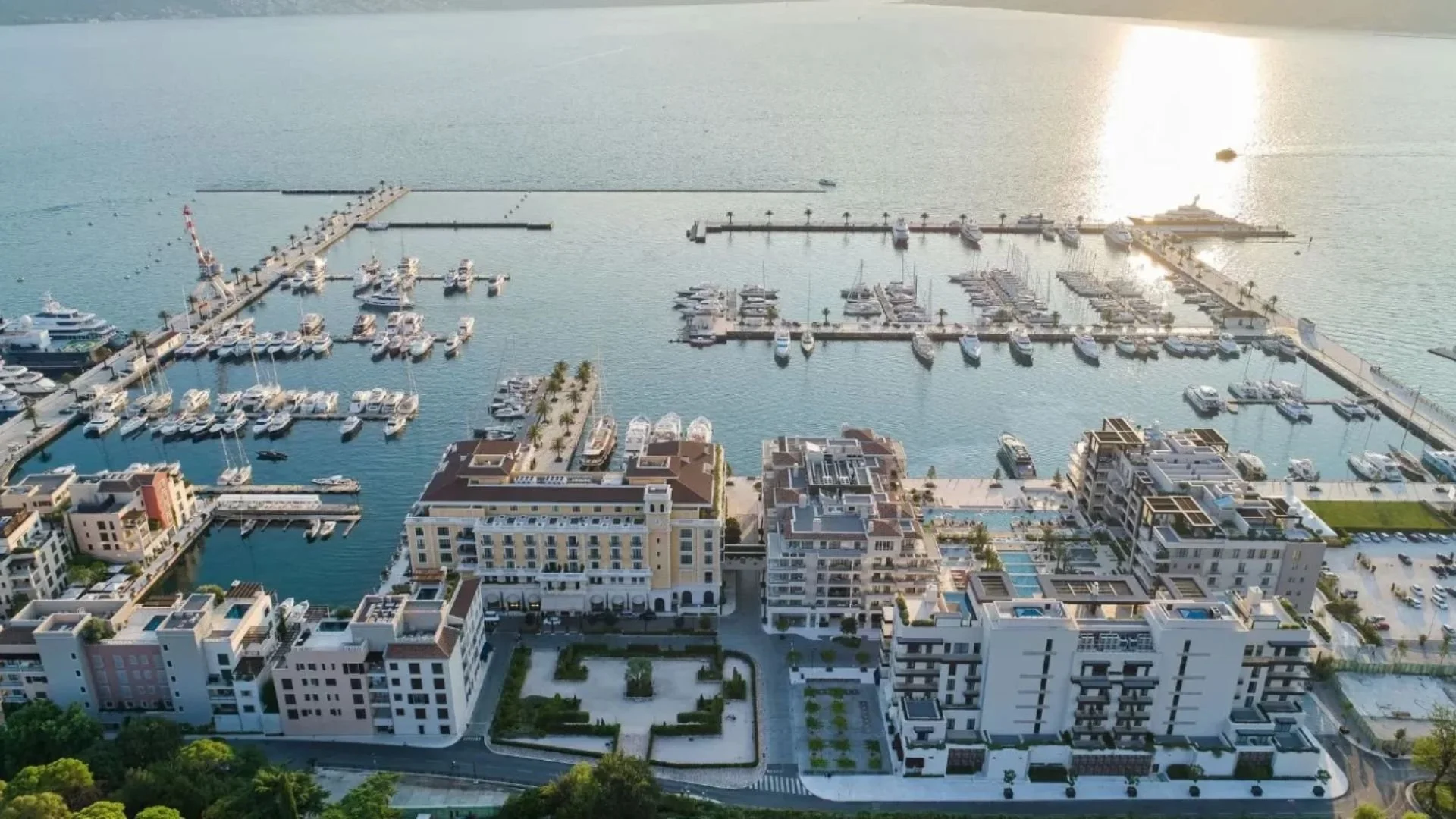
Porto Montenegro’s South Village
The Role of Phasing: From Quick Wins to Long-Term Value
One of the most important aspects of implementation is phasing.
Rather than attempting large-scale transformation, successful projects typically follow a staged approach:
Short Term (0–6 months)
Focus on high-impact, low-disruption interventions:
upgrading key arrival points
introducing planting clusters in visible locations
replacing degraded or inconsistent elements
improving terrace edges and spatial definition
These changes deliver immediate results and build momentum.
Medium Term (6–12 months)
Move towards systemisation and consistency:
rationalising materials and planter types
upgrading planting across wider areas
implementing coordinated wayfinding systems
This phase transforms isolated improvements into a coherent strategy.
Longer Term (12+ months)
Focus on integration and identity:
extending principles to new development phases
introducing signature public realm moments
integrating landscape, lighting, signage and public art
At this stage, the destination evolves from a collection of spaces into a recognisable place with a strong identity.
Why This Matters: Experience Drives Value
Public realm is often underestimated in commercial terms. In reality, it plays a direct role in:
increasing dwell time
improving navigation and comfort
enhancing F&B and retail performance
reinforcing brand positioning
For waterfront and mixed-use developments in particular, the public realm is not secondary—it is the glue that connects all components of the asset.
From Design to Strategy
The key shift is moving from:
→ isolated design interventions
to
→ a coordinated, phased public realm strategy
This requires:
alignment across landscape, wayfinding and materials
clarity on priority areas
a structured implementation roadmap
When these elements come together, the result is not just a more attractive environment, but a more legible, more valuable and more memorable destination.
Final Thought
As developments grow in scale and complexity, the quality of the public realm becomes increasingly important.
The most successful destinations are not defined by individual buildings, but by how people move through, experience and connect with the spaces between them.
That is where strategic public realm design delivers its greatest impact.